All items of category 'Resilience'
Specific interventions that promote adaptation and management of difficult, challenging life experiences.

The Becoming ACEs Aware in California training is a free, two-hour, online course that covers Adverse Childhood Experiences (ACEs), toxic stress, ACE screening, toxic stress risk assessment, and trauma-informed care and provides health care teams and community providers with evidence-based strategies to prevent and mitigate toxic stress physiology. Updated in 2026, the training includes tailored learning pathways for Medical Providers, Mental and Behavioral Health Providers, and members of the broader Care Team. The training offers between 2.0 and 9.0 free Continuing ...
The California Child and Adolescent Mental Health Access Portal (Cal-MAP) is a no-cost consultation program that supports primary care and school-based providers in delivering timely, high-quality mental health care to youth ages 0–25. Cal-MAP is part of the CalHOPE pediatric access initiative and is designed to expand access to behavioral health services, particularly in California’s rural and underserved communities. Through Cal-MAP, providers who screen for Adverse Childhood Experiences (ACEs) and toxic stress can be connected with child and adolescent psychiatrists, ...

In this webinar, campaign representatives and youth advisors provide an overview of the Office of the California Surgeon General's Live Beyond campaign. They share the campaigns's goals ad youth co-creation process, along with key resources for educators and other adults supporting youth impacted by ACEs and toxic stress. In additional, they share research insights and strategies to engage with youth and caregivers on these topics, along with other innovative tactics to support storytelling and healing from ACEs and toxic stress.

The California Advancing and Innovating Medi-Cal (CalAIM) initiative represents a bold reimagining of how health care is delivered to Medi-Cal members. Launched in 2022 by the California Department of Health Care Services (DHCS), CalAIM aims to improve health outcomes for Medi-Cal members by shifting from a traditional medical model to a more comprehensive approach that more adequately meets the needs of individuals, families, and communities. At its core, CalAIM recognizes that health is deeply influenced by the social and environmental ...
Community Health Workers (CHW) can be trusted partners to individuals and communities given their lived experiences, connections, and knowledge. In this webinar, we will discuss CalAIM’s CHW benefit, including participant eligibility, an overview of CHW services, and how the CHW benefit can support individuals and families experiencing the impacts of Adverse Childhood Experiences (ACEs) and/or toxic stress. Designed as a preventive service, the CHW benefit is available to support individuals with several risk factors and/or diagnoses, including behavioral health, chronic ...

Enhanced Care Management (ECM) is a holistic and intensive care management program established under California Advancing and Innovating Medi-Cal (CalAIM). ECM is available to children and youth with complex health needs, including those identified through an Adverse Childhood Experiences (ACE) screen as at high risk for toxic stress. ECM can provide Medi-Cal members with extra help in navigating the physical and behavioral health system and accessing social needs. All ECM services are available through a network of community-based providers contracted ...

Join us for an in-depth webinar exploring the California Advancing and Innovating Medi-Cal (CalAIM) initiative and its role in enhancing clinical responses for children and youth at risk of toxic stress physiology. This session will provide a foundational understanding of CalAIM’s key components, including Enhanced Care Management (ECM) and Community Supports, and how these initiatives create new opportunities for integrating trauma-informed care into clinical practice. Attendees will learn how CalAIM can be leveraged to improve care coordination, address social drivers ...

The "Connecting ACE Screening with CalAIM" series explores the critical intersection of Adverse Childhood Experiences (ACEs) screening and response efforts and the California Advancing and Innovating Medi-Cal (CalAIM) initiative. Designed for health care providers, behavioral health clinicians, and community-based organizations, this series highlights how CalAIM’s components, including Enhanced Care Management and Community Supports, can serve as vital resources for individuals impacted by ACEs and toxic stress. Participants will gain insights into evidence-based strategies for integrating ACE screening with whole-person care ...

This webinar focuses on supporting youth with Adverse Childhood Experiences (ACEs) and equipping them with tools to thrive. Led by ACEs Aware young adult patient advisors and health professionals, this webinar highlights evidence-based approaches and practical techniques to help youth manage stress, build coping skills, and enhance their mental well-being. Whether you're a health care provider, behavioral health clinician, counselor, or advocate for youth well-being, this webinar will provide tools and inspiration to help young people heal from adversity and ...
This webinar focuses on the revision of an American College of Surgeons trauma-informed care curriculum that was implemented, tested, and revised to educate Zuckerberg San Francisco General Hospital health care workers. Trauma-informed care is an approach that considers patients’ lived experience and current circumstances to provide respectful, patient-centered care. Participants will hear about how this team used human-centered design principles to revise the curriculum, train trauma-informed health care workers, and promote a trauma-informed hospital ecosystem.
This webinar, part of the ACEs Aware Science and Innovation Speaker Series, features Dr. Nicole Racine and Katelyn Greer, who will present on “Youth Engagement in Child Maltreatment Research: Gaps, Barriers, and Approaches.” They will provide an overview of the potential for youth engagement within the field of child maltreatment research, identify barriers to youth engagement, provide trauma-informed strategies for engaging youth in the context of research, and review existing trauma-informed models for youth engagement.

This webinar, part of the ACEs Aware Science and Innovation Speaker Series, features Dr. Joanne Ryan, who will present on “Biological Embedding of Early-Life Adversity and a Scoping Review of the Evidence for Intergenerational Epigenetic Transmission of Stress and Trauma in Humans.” Dr. Ryan will provide an overview of studies that demonstrate the impact of early-life stress on DNA methylation and the biological transmission of stress across generations.
As part of the ACEs Aware Science and Innovation Speaker Series, this webinar will feature Dr. Joan Jeung, who will present on “A Caregiver-Child Intervention for Mitigating Toxic Stress (‘The Resiliency Clinic’): A Pilot Study.” Dr. Jeung will discuss a novel primary care-based group intervention designed to mitigate toxic stress and promote resilience in children exposed to Adverse Childhood Experiences (ACEs).
In this Community Spotlight webinar, we feature the National Foster Youth Institute (NFYI), which is a national nonprofit that works to empower current and former foster youth to use their lived experiences to tackle issues that most impact vulnerable children, families, and young adults. Los Angeles County is the largest child welfare system in the nation, and members of NFYI’s Los Angeles Chapter will share their lived experience of navigating issues with housing, mental health, justice, parenting, and substance use. ...
This webinar, part of the ACEs Aware Science and Innovation Speaker Series, features Dr. Cody A. Hostutler, who will present on ACEs Screening in Adolescent Primary Care: Psychological Flexibility as a Moderator. Dr. Hostutler will discuss the role of psychological flexibility in moderating the effects of Adverse Childhood Experiences (ACEs) on depression and body mass index (BMI) in adolescents.

This webinar, part of the ACEs Aware Science and Innovation Speaker Series, will feature Rebecca Ferro, who will present on “When Adverse Childhood Experiences Present to a Statewide Child Psychiatry Access Program.” Ferro will discuss the role of child psychiatry access programs in supporting primary care providers with pediatric patients.
In this webinar, part of the Implementation with Intention series, participants will explore the opportunity of primary care-based dyadic care for improving child and family well-being. They will review the new dyadic care Medi-Cal benefit and opportunities to pay for health promotion and prevention and explore the intersection between dyadic care and toxic stress prevention.

This webinar, part of the ACEs Aware Science and Innovation Speaker Series, features Dr. Brian Joyce, who will present on “The Association of Adverse Childhood Experiences (ACEs) with Accelerated Epigenetic Aging in Midlife.” Dr. Joyce will talk about how ACEs may be persistently associated with the biological aging process in later life.

This webinar, part of the ACEs Aware Science and Innovation Speaker Series, will feature Dr. Loren L. Toussaint, who will present on “The Association Between Parent and Child ACEs is Buffered by Forgiveness of Others and Self-Forgiveness.” Dr. Toussaint will discuss how self-forgiveness and forgiveness of others may interrupt, or buffer, intergenerational transmission of ACEs.
The Office of the California Surgeon General, in partnership with California’s Children and Youth Behavioral Health Initiative, recently launched a campaign to raise awareness and offer resources to youth and young adults affected by Adverse Childhood Experiences (ACEs) and toxic stress. The Live Beyond campaign is grounded in science, market research, and best practice, and was co-created with subject matter experts and youth from the ACEs Aware Youth and Young Adult Advisory Board. Join current and former California Surgeon Generals, Dr. ...

In this course, participants will gain a comprehensive understanding of the causes and manifestations of burnout among health care professionals. They will learn about evidence-based self-care and stress-mitigation strategies they can use to promote personal resilience, as well as strategies health care organizations can use to manage and prevent burnout.
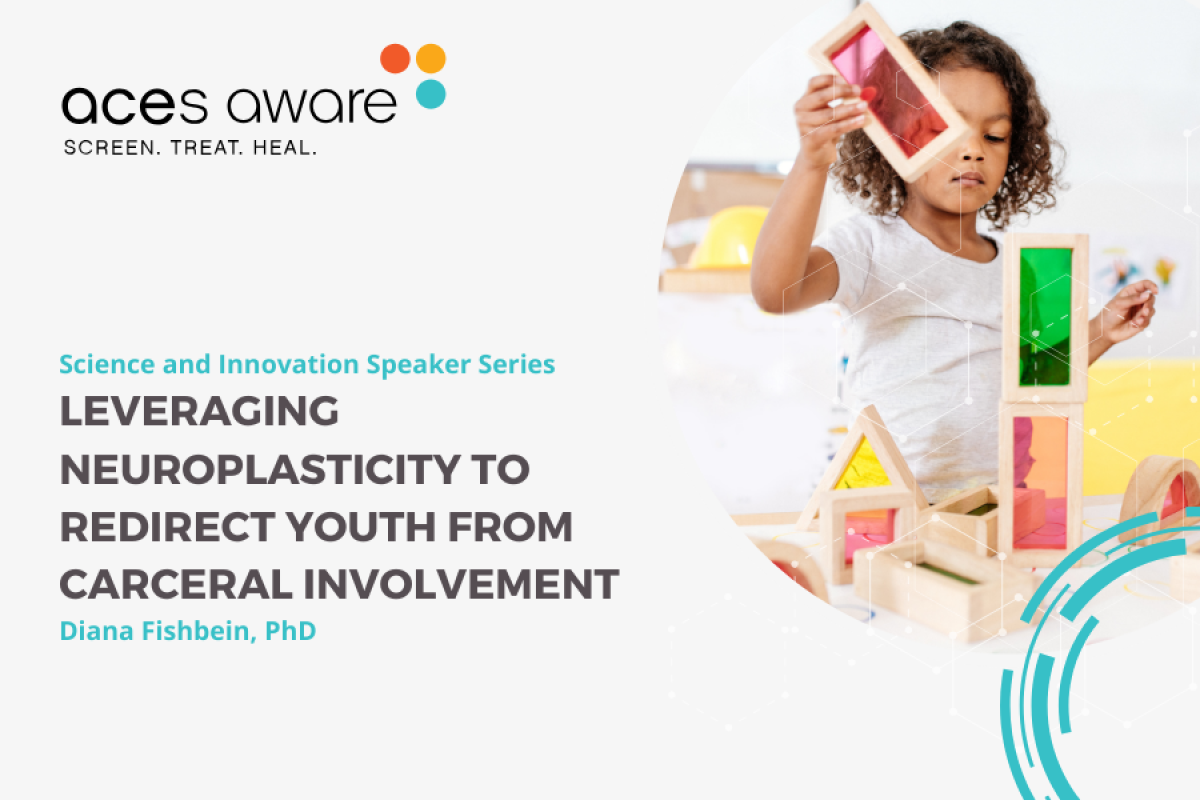
This webinar, part of the ACEs Aware Science and Innovation Speaker Series, will feature Dr. Diana Fishbein who will present on “Capitalizing on Neuroplasticity Across Development to Redirect Pathways from Juvenile Justice Involvement”. Dr. Fishbein will discuss insights on how to disrupt an adverse developmental pathway in young people that may lead to incarceration.

In this ACEs Aware Science and Innovation Speaker Series webinar, Dr. Rosemarie de la Rosa will present on the paper, “Biological Burden of Adverse Childhood Experiences in Children”. Dr. De la Rosa will discuss the relationship between ACEs and related life events and allostatic load, known as “wear and tear” from chronic stress, in a pediatric population.
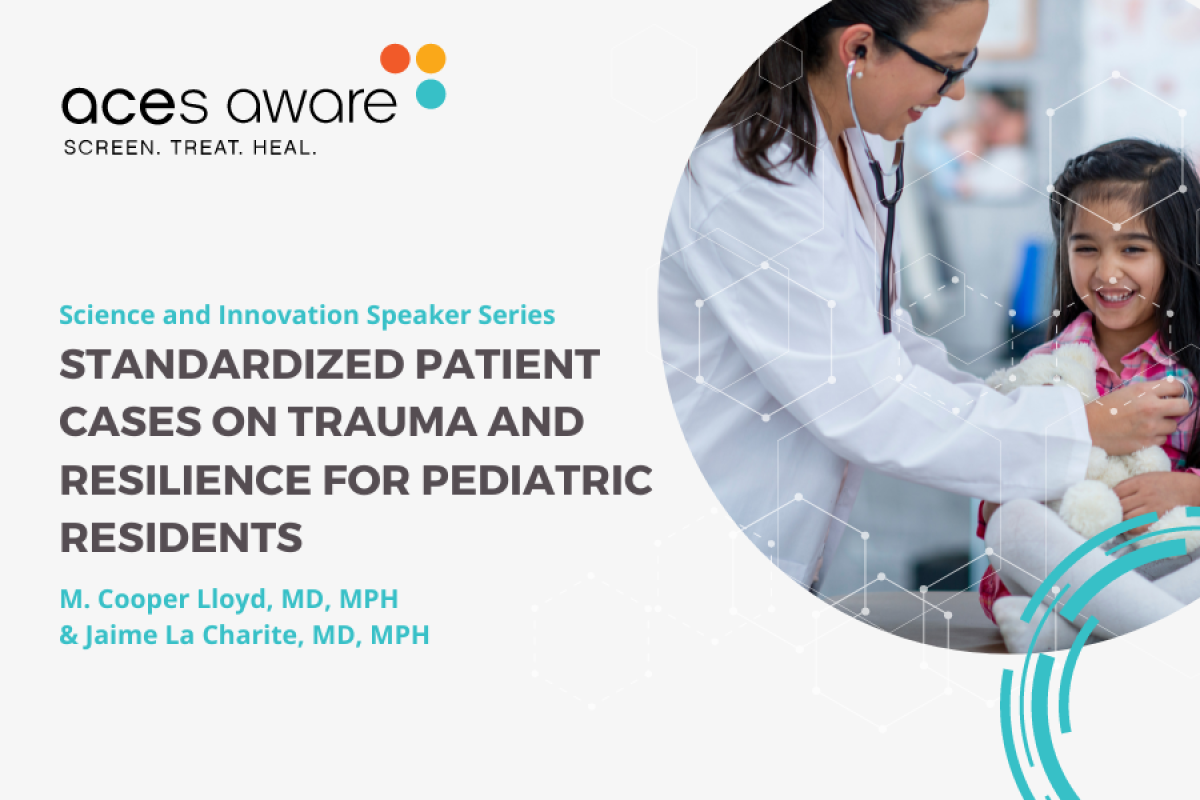
This webinar, part of the ACEs Aware Science and Innovation Speaker Series, will feature Dr. M. Cooper Lloyd and Dr. Jaime La Charite, who will present on the paper, “Addressing Trauma and Building Resilience in Children and Families: Standardized Patient Cases for Pediatric Residents”. Dr. Cooper Lloyd and Dr. La Charite will discuss the creation, implementation, and evaluation of three standardized patient cases to train pediatric residents on how to use trauma-informed principles to talk to patients about Adverse Childhood ...
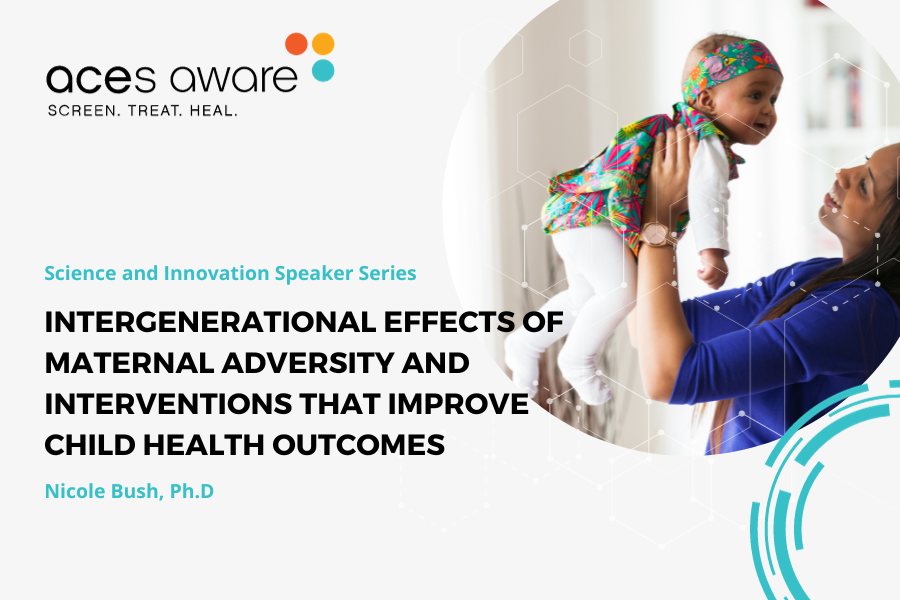
This webinar, part of the ACEs Aware Science and Innovation Speaker Series, will feature Dr. Nicole Bush who will present on the following two papers: “Intergenerational Transmission of Effects of Women's Stressors During Pregnancy: Child Psychopathology and the Protective Role of Parenting” and “The Effects of a Prenatal Mindfulness Intervention on Infant Autonomic and Behavioral Reactivity and Regulation.” Dr. Bush will discuss the role of maternal histories of adversity (in pregnancy or early childhood) on their children's health, protective factors ...

In this course, developed with the UCLA Family Development Program, some of the basic concepts of trauma and resilience informed care will be examined. It focuses on how to improve the Neonatal Intensive Care Unit (NICU) experience for families and, in turn, improve infant health outcomes. Several situations that may be encountered in the NICU are explored and ways to help alleviate the impact of trauma for families, providers, and the people with whom we work are reviewed.

This webinar, part of the ACEs Aware Science and Innovation Speaker Series, will feature Dr. Neeta Thakur and Dr. Danielle Hessler Jones, who will present on the paper, “Pediatric ACEs and Related Life-events Screener (PEARLS) and Health in a Safety Net Practice”. They will discuss the use of the PEARLS tool for identifying and facilitating early detection of and intervention for ACEs in a pediatric setting.

This webinar, part of the ACEs Aware Science and Innovation Speaker Series, will feature Dr. Erin Hambrick, who will present on the paper, “Beyond the ACE score: Examining relationships between timing of developmental adversity, relational health and developmental outcomes in children”. Dr. Hambrick will discuss how the timing of adversity through four developmental stages affects developmental outcomes in children, and how relational health can be a supplemental tool to ACE screening in both evaluating developmental outcomes and serving as a ...

The ACEs Aware Community Spotlight webinar series highlights the innovative work being done by organizations across California to prevent, identify, and respond to Adverse Childhood Experiences (ACEs) and toxic stress. In this Community Spotlight webinar, we feature Underground GRIT, a Southern California community-based organization that advocates for and provides a full scope of transformative services and support to men, women, and youth who have been system impacted. Led by Co-Founder and Program Manager Sharon Tang, MPH, the presentation describe the ...

This presentation will describe a series of pilot studies that incorporated screening for Adverse Childhood Experiences (ACEs) and resilience as part of routine prenatal care. These pilots built a foundation for Kaiser Permanente Northern California (KPNC) to expand ACE and resilience screening to all pregnant patients as part of standard care in 2021. The presenters will share data on the acceptability and feasibility of ACE screening in standard prenatal care, provide an overview of how ACEs are associated with perinatal ...

Engaging with partners and resources within and beyond the clinic is key to providing trauma-informed care and a robust response to Adverse Childhood Experience (ACE) screening. This webinar will explore the concept of a trauma-informed network of care to support reproductive and sexual care teams’ response to ACE screening. Participants will consider potential collaborators and resources to address immediate stressors and support healing and thriving, including in situations where resources are limited. We will also consider how support for the ...

This webinar, part of the ACEs Aware Science and Innovation Speaker Series, will feature Dr. Rachel Gilgoff, who will present on the paper, “Adverse Childhood Experiences, Outcomes, and Interventions”. She will discuss how the science of stress physiology provides a window into therapeutic targets for treating toxic stress, and will examine how providers can develop their clinical response to Adverse Childhood Experiences.

The Implementation with Intention webinar series continues with a session dedicated to answering commonly asked questions about implementing ACE screening and response initiatives in clinical settings. Participants will also learn about the resources available to support California teams doing this work, including new trainings on the ACEs Aware Learning Center, technical assistance offerings, and a new implementation pilot program.

Receiving reproductive health care can be a sensitive or even scary experience for patients, particularly those who have experienced adversity and trauma. Participants will review patient cases and hear from a family doctor who is doing this work in a reproductive health clinic setting. The webinar will address how the clinical team can apply trauma-informed principles to facilitate safe, collaborative, and empowering patient experiences; to administer sensitive screenings, including Adverse Childhood Experience (ACE) screening, in a trauma-informed way; and to ...

The ACEs Aware Science and Innovation Speaker Series provides a forum for discussing the emerging science of toxic stress, Adverse Childhood Experiences (ACEs), and other early life adversities, as well as resilience and strength-based factors within a foundation of equity. The series highlights cutting-edge researchers and innovators in the field who have published evidence-based, community-engaged, and data-driven studies. In the first webinar in the series, Dr. Pat Levitt will present on his paper, “Leveraging the Biology of Adversity and Resilience ...
In this webinar, members of the Marin Community Clinics (MCC) team will share their experience with implementing ACE screening and response in a Federally Qualified Health Center in the Bay Area. MCC, a pioneer in California since starting this work in 2017, is featured as a case study in the ACEs Aware Implementation How-to Guide and highlighted in previous “Implementation with Intention” webinars. Participants will have the opportunity to hear directly from MCC team members about their ACE screening implementation ...

This webinar will help participants tie together the elements of getting a practice ready, forming a team, getting buy-in, determining who and how to screen, and developing the clinical response to ACEs and toxic stress through real-world examples. Participants will learn how to prepare their teams and operations and discuss promising practices and lessons for ACE screening implementation from clinics in the field engaged in this work.

This webinar will help participants understand how to develop a clinical response to ACE screening and toxic stress. Participants will learn how to gather information, conduct a clinical assessment, and develop a treatment and follow-up plan using evidence-based strategies and frameworks.

In this webinar, participants will learn to understand and advance the key decisions that need to be made in selecting their clinic’s approach to ACE screening and the clinical response. This webinar will focus on helping participants determine who they will screen and how, prepare their clinical response for treating toxic stress, and map out how they will integrate ACE screening into their workflow.

The foundational information shared in this webinar will help California providers and health care teams understand the Adverse Childhood Experience (ACE) screening process at a high level and explore different approaches to implementation. Subsequent webinars in the series will focus on the specific details and logistics that clinics need to consider when implementing ACE screening and response.

The foundational information shared in this webinar will help California providers and health care teams understand the Adverse Childhood Experience (ACE) screening process at a high level and explore different approaches to implementation. Subsequent webinars in the series will focus on the specific details and logistics that clinics need to consider when implementing ACE screening and response.

This 12-lecture series from the Landon Pediatric Foundation is recommended for primary care providers and anyone who have an interest in ACEs and trauma-informed care.

This series from La Clinica de La Raza offers tools for medical providers, behavioral health clinicians, medical assistants, health educators, other women’s health team members to learn how to best care for our patients, to care for ourselves, and to connect with the purpose, meaning, and joy in our work.

This training might be of interest to those serving pediatric patients in Santa Barbara, Ventura, and San Luis Obispo Counties. PeRC is a community partnership and was a grantee of the ACEs Aware initiative.

This training might be of interest to those serving families who would like to know more about intimate partner violence screening, including how ACE screening can be framed using the CUES approach (Confidentiality, Universal Education, Empowerment, Support). Futures Without Violence provides groundbreaking programs working to end violence against women and children and was a grantee of the ACEs Aware initiative.

This training might be of interest to those serving Pediatric patients who would like to learn more about trauma-informed pediatric care, and how mental health and primary care clinicians can work together by applying a "stepped care" framework to toxic stress treatment planning. UCSF Benioff Children’s Hospital was an ACEs Aware grantee.
In this Supplemental Training from First 5 Contra Costa, participants will learn about the impact of Adverse Childhood Experiences (ACEs), trauma, and toxic stress on young children’s development and learning as influenced by culture, racism, discrimination, social determinants of health, and other factors.

This 4-module supplemental training series is developed by RCHC and designed for health care teams interested in screening for ACEs and applying trauma-informed care in their practice.

This training from First 5 Alameda County explains ACEs and their prevalence, health disparities in the data, toxic stress physiology, and related impacts on health, including underlying biological mechanisms. This training is intended for Medi-Cal providers.

This training from Tri-City Mental Health will delve into how we each play a vital role in supporting the health and well-being of children, adults, families, and communities.

This 7-module virtual supplemental training from Humboldt County Department of Health and Human Services addresses ACEs, their prevalence, and trauma-informed care in Indigenous communities of California. The content of these modules support screening for ACEs and treatment of toxic stress in Indigenous communities.

This training from Humboldt County Department of Health and Human Services is organized into seven modules and provides information on the vulnerability and resilience of young children in relation to brain development and ACEs.

This webinar from the American Professional Society on the Abuse of Children – California ACEs Academy discusses the power of preventing ACEs and explores topics related to ACEs such as corporal punishment and the spiritual impact of trauma.

This webinar from the American Professional Society on the Abuse of Children – California ACEs Academy discusses opportunities for ACEs screening implementation in the medical setting, identifies evidence-informed clinical approaches for responding to ACEs within pediatric and family medicine practice, and presents effective strategies for responding to ACEs through community partnerships.
This is the third and final webinar in a series that explores the science of Adverse Childhood Experiences (ACEs) and toxic stress. Dr. Rachel Gilgoff, Clinical and Science Senior Advisor for Aurrera Health Group, dives into how providers can develop their clinical response to ACEs and toxic stress, including treatment and follow-up plans.
This is the second in a series of webinars that explores the science of Adverse Childhood Experiences (ACEs) and toxic stress. Al Race, Deputy Director and Chief Knowledge Officer from the Center on the Developing Child at Harvard University leads a deep dive into how early experiences affect lifelong health.
This is the first in a series of webinars that explores the science of Adverse Childhood Experiences (ACEs) and toxic stress, presented by California Surgeon General Dr. Nadine Burke Harris.
Featuring opening remarks by California Surgeon General Dr. Nadine Burke Harris, this is the first in a series of webinars that will explore research demonstrating how racism and other forms of discrimination can serve as risk factors to activate a toxic stress response, and lead to health conditions that have been empirically associated with exposure to Adverse Childhood Experiences (ACEs).
This ACEs Aware webinar discusses the physiology of toxic stress and how to apply the science of Adverse Childhood Experiences (ACEs) and toxic stress in pediatric care.
The February ACEs Aware webinar discusses the secondary health effects associated with stress caused by COVID-19. Presenters share how ACEs Aware training and resources to treat toxic stress can equip providers with the knowledge and tools they need to effectively incorporate ACE screening into patient care, and to better respond to and support their patients during this time.
This webinar includes a discussion and concrete example of a trauma-informed network of care, a group of interdisciplinary health, education, and human service professionals, community members, and organizations that support adults, children, and families by providing access to evidence-based “buffering” resources and supports that help to prevent, treat, and heal the harmful consequences of toxic stress.
California’s first Surgeon General Dr. Nadine Burke Harris set a bold vision to cut ACEs and toxic stress in half in one generation through a strategically deployed, coordinated public health initiative designed to raise awareness, reduce transmission of ACEs and strengthen our response networks. As part of this work, the Office of the California Surgeon General (CA-OSG) developed the Roadmap for Resilience: The California Surgeon General’s Report on Adverse Childhood Experiences, Toxic Stress, and Health, which lays out how to advance ...
This webinar provides information for women’s health providers about the importance of ACE screening in improving maternal health. Speakers share resources for providers looking to introduce ACE screening in their practice, examples of how to create a healing environment for patients, and case studies on how to respond to ACEs with trauma-informed care.
This webinar provides strategies, promising practices, and resources to support health care providers and clinical leadership as they assess their own organizational readiness and build workforce resilience to successfully integrate Adverse Childhood Experience (ACE) screening into clinical practice.
This webinar offers practical tips and examples on how providers can incorporate stress regulation strategies into their treatment planning for pediatric patients.

With an introduction from California’s first Surgeon General, Dr. Nadine Burke Harris, this webinar features a cross-disciplinary group of providers who have extensive experience with ACE screening and clinical response in adult primary care. Ths webinar covers: The value of ACE screening and clinical response in family and adult medicine; The science and physiological impacts of ACEs and toxic stress; The ACE screening tool and the ACEs and Toxic Stress Risk Assessment Algorithm; and Four case studies on how screening ...
Dr. Burke Harris and three other health care providers walk through two case studies to show how ACE screening can impact their clinical decision-making.
With physician perspectives from pediatrics, women’s health, and emergency medicine, panelists discuss the secondary health impacts of COVID-19 and how to support patients during this time. This webinar covers: the potential short and long-term health consequences, delays and disruptions in care, and using Telehealth and trauma-informed approaches.
This webinar covers the importance of, and opportunities for, building and maintaining trauma-informed connections with patients using telehealth during the COVID-19 emergency.
The webinar covers how trauma-informed principles and practices can help providers and their teams sustain high quality care of patients, and take good care of themselves in the face of acute stress resulting from COVID-19. This includes ways to help patients increase buffering and protective factors, as well as supporting patients using Telehealth. The webinar also highlighted resources and handouts that providers can share with their patients.