All items of category 'Birth to Five'
Working with young children (birth to five years).
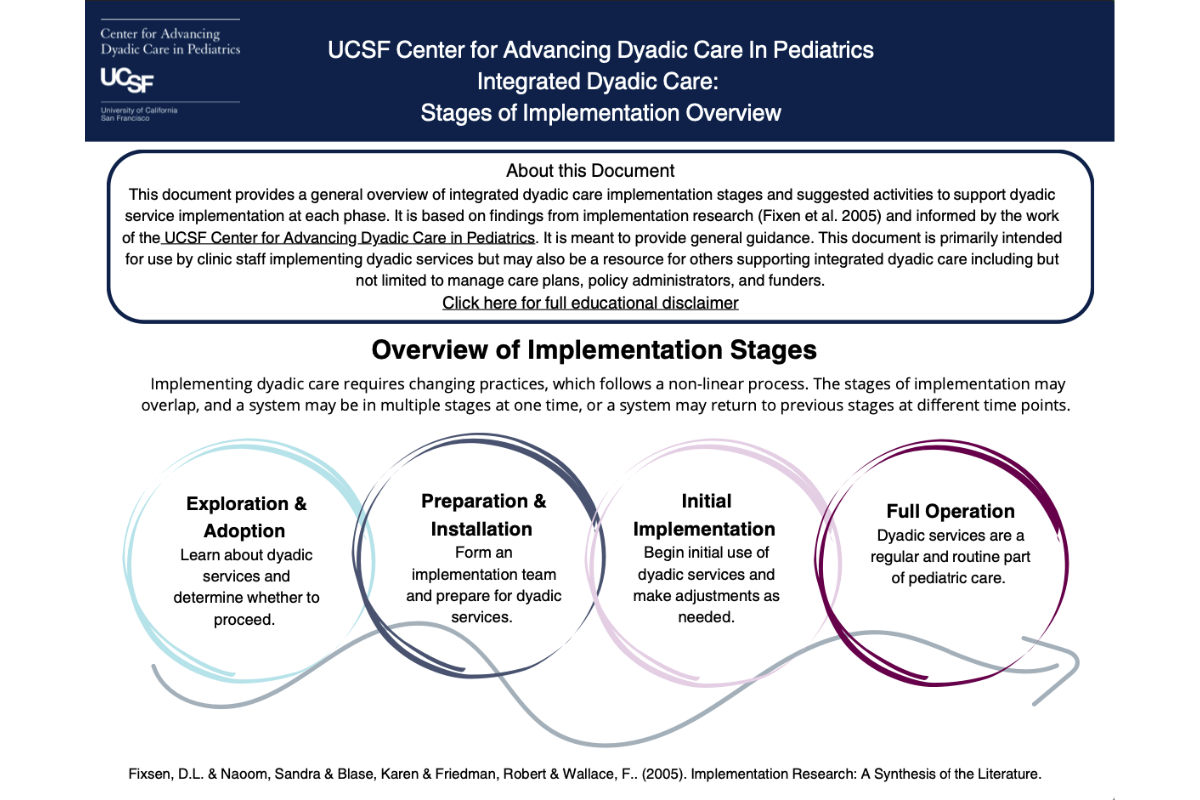
This document provides a general overview of integrated dyadic care implementation stages and suggested activities to support dyadic service implementation at each phase. It is based on findings from implementation research and informed by the work of the UCSF Center for Advancing Dyadic Care in Pediatrics. It provides general guidance, primarily for clinic staff implementing dyadic services, but may also be useful for others that support integrated dyadic care, including managed care plans, policy administrators, and funders.
This video takes viewers through the accompanying document, offering practical guidance for implementing dyadic, team-based well child visits in pediatric primary care, where a behavioral health clinician (BHC) and primary care provider (PCP) collaborate to support both the child and caregiver. It includes an interview with a pediatric primary care provider sharing her experience offering dyadic team-based services.
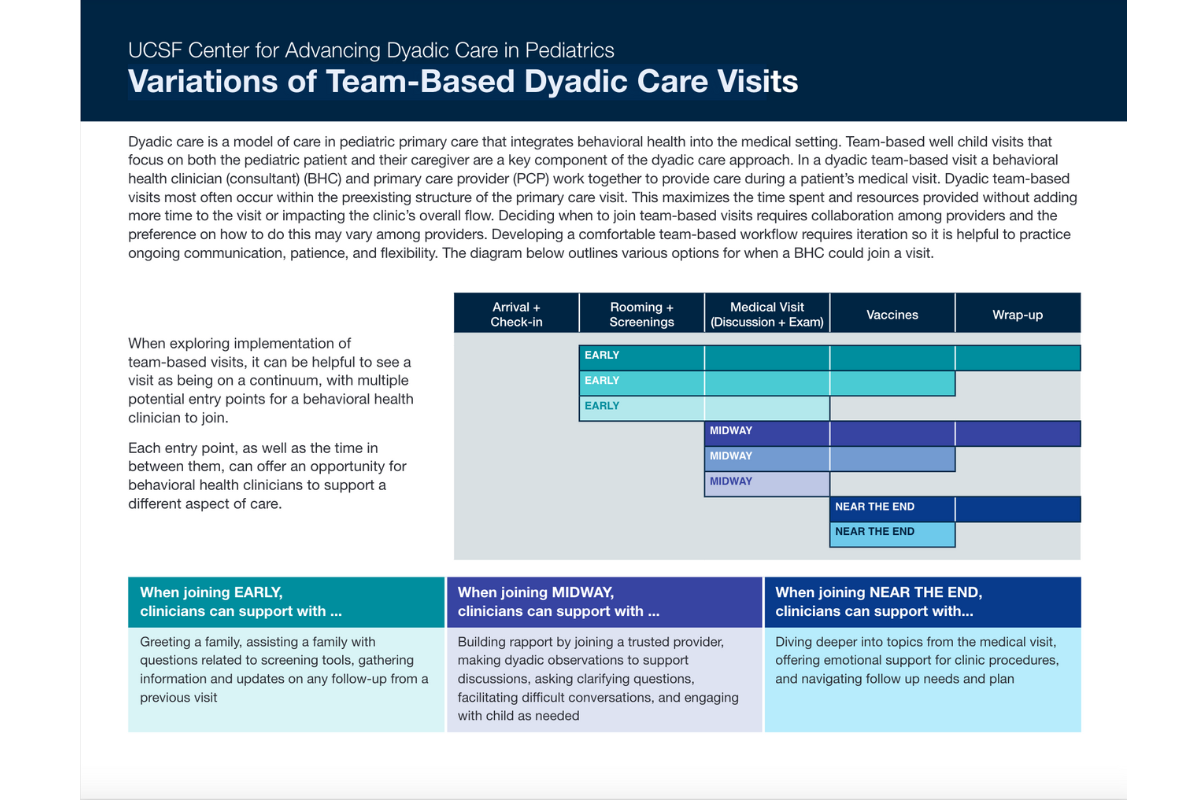
This document offers practical guidance for implementing dyadic, team-based well-child visits in pediatric primary care, where a behavioral health clinician (BHC) and primary care provider (PCP) collaborate to support both the child and caregiver. It includes options for when a BHC can join a visit, along with examples that demonstrate variations in real-world practice. There is an accompanying video explanation that is recommended to view in conjunction with this document to help users navigate the document and apply the guidance effectively.
This video offers guidance on documenting dyadic care visits — where both the pediatric patient and caregiver are involved — while protecting sensitive caregiver information in compliance with the CURES Act and “Open Notes” requirements. It includes some background information on the CURES Act, documentation strategies, adaptable templates, and real-world clinic examples. There is an accompanying document along with a video explanation to support users in navigating and applying the guidance effectively.
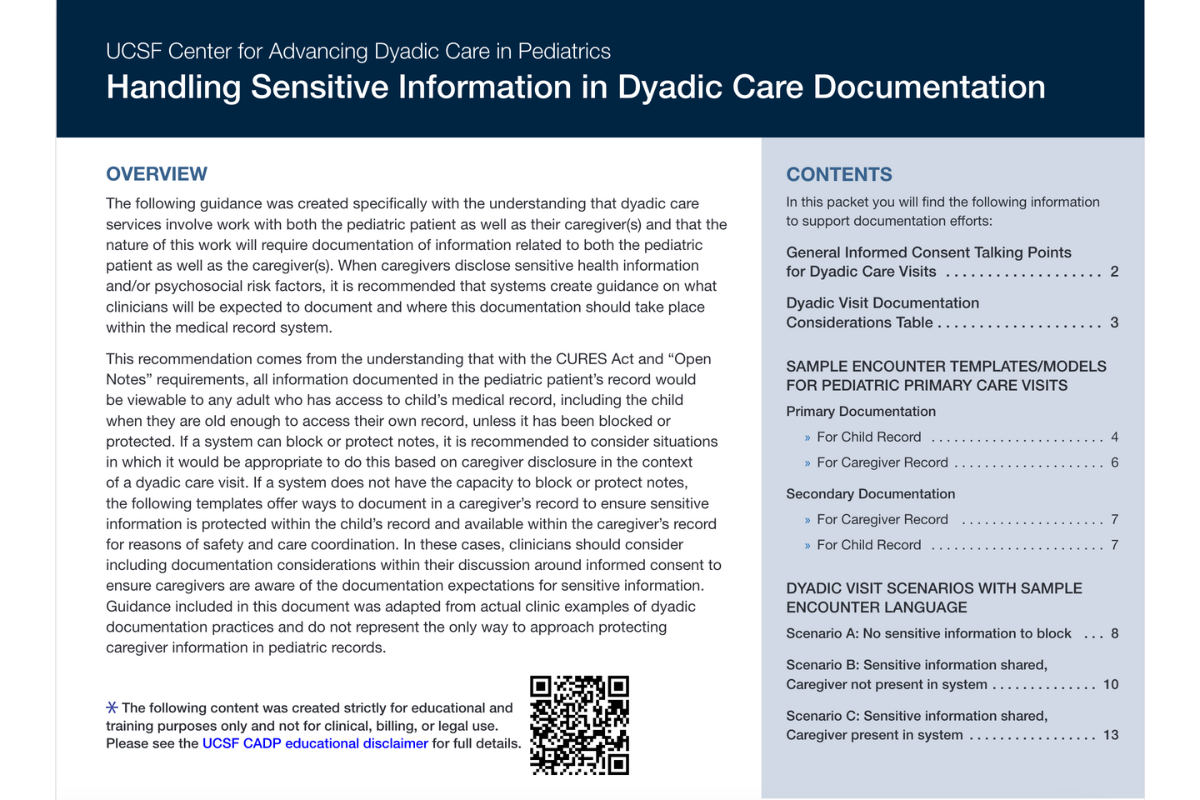
This resource offers guidance on documenting dyadic care visits while protecting sensitive caregiver information in compliance with the CURES Act and “Open Notes” requirements. It includes documentation strategies, adaptable templates, and real-world clinic examples. There is an accompanying video recommended to view in conjunction with this document that provides more background information on the CURES Act as well as an overview of the document itself to support users in navigating and applying the guidance effectively.
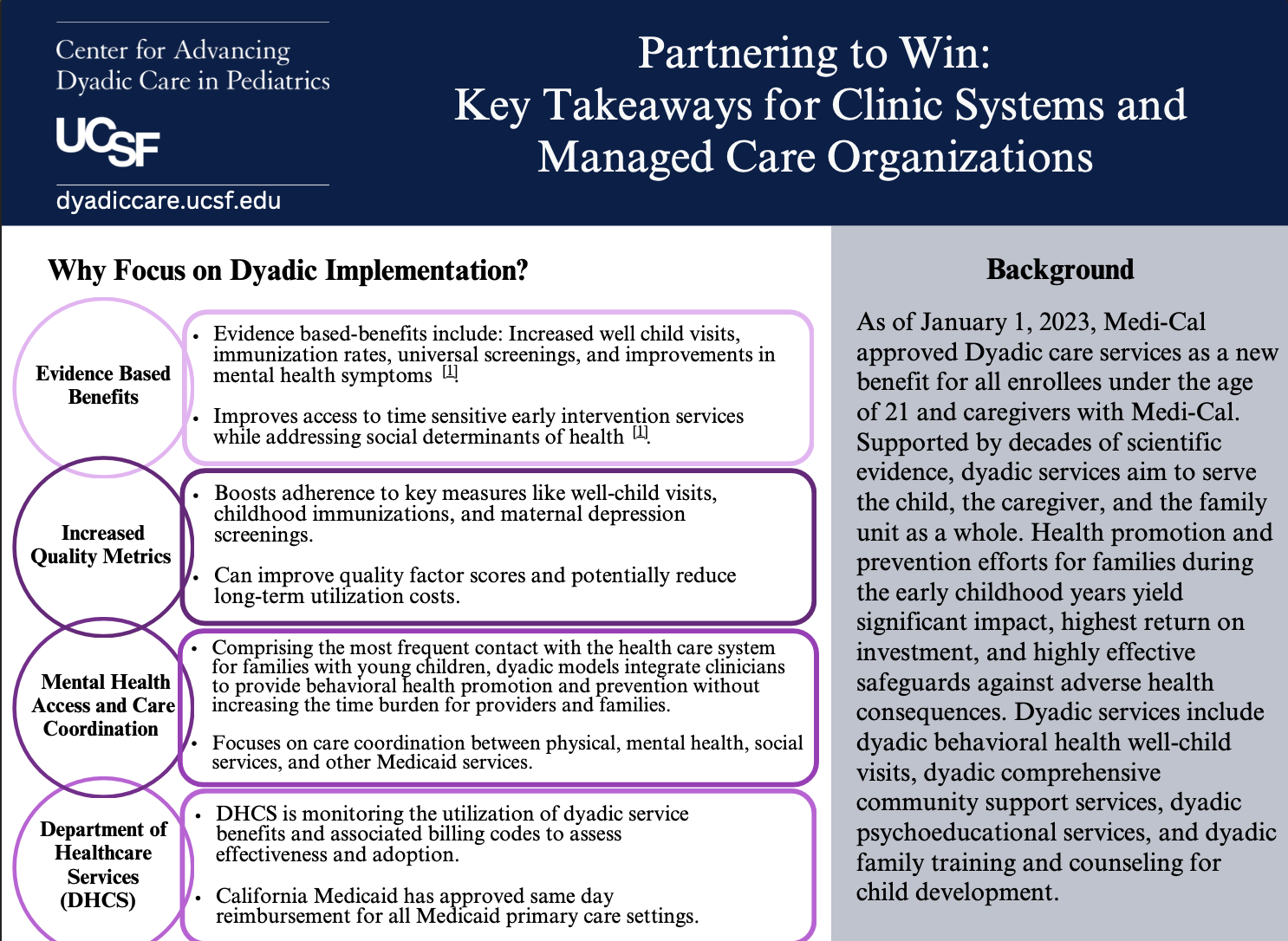
This resource provides background information on the dyadic benefit and key takeaways for clinic systems and managed care plans. It highlights the evidence-based benefits of focusing on dyadic care, outlines key action items for managed care plans to support uptake, and provides relevant tools to guide implementation.
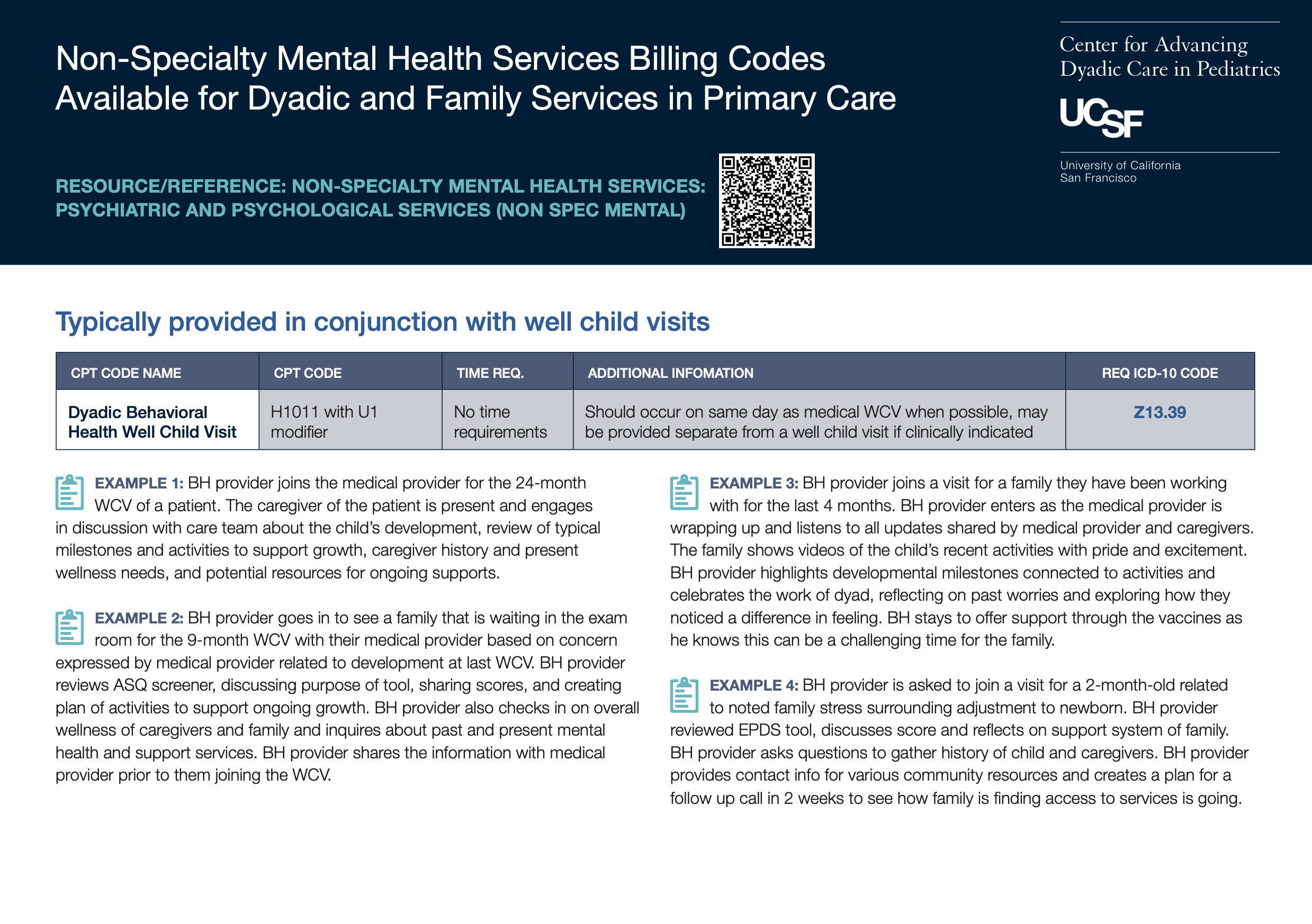
This document outlines billing codes identified in the Non-Specialty Mental Health Services Manual as available for dyadic and family services in primary care. It includes each Current Procedural Terminology (CPT) code, any known time requirements, required International Classification of Diseases (ICD)-10 codes, and additional billing details. It also provides practical examples to illustrate how dyadic care visits may look in real-world settings, helping teams apply the codes accurately and confidently.
This FAQ document is a collection of questions and answers organized by key topics to support the understanding and implementation of dyadic care. This document answers common questions about dyadic care, the connection between dyadic care and Adverse Childhood Experiences (ACEs), practical applications of dyadic care, billing guidance for the dyadic benefit, considerations for data and electronic medical records (EMR), and more.
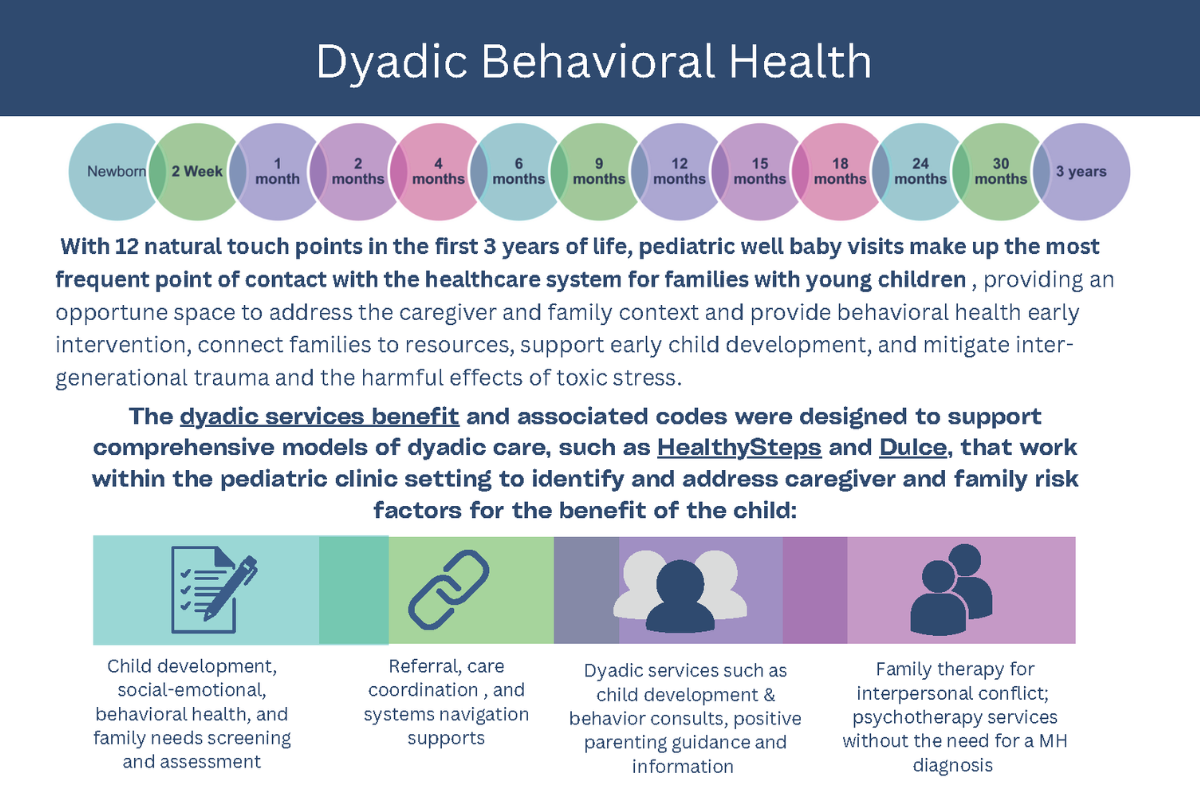
Dyadic care improves child health and the way healthcare is delivered. This handout offers a summary of dyadic care in behavioral health settings.

Pediatric primary care offers an unparalleled opportunity to promote child health by also supporting the health of caregivers through dyadic interventions. This handout is useful for understanding the rationale for dyadic care models in primary care settings.
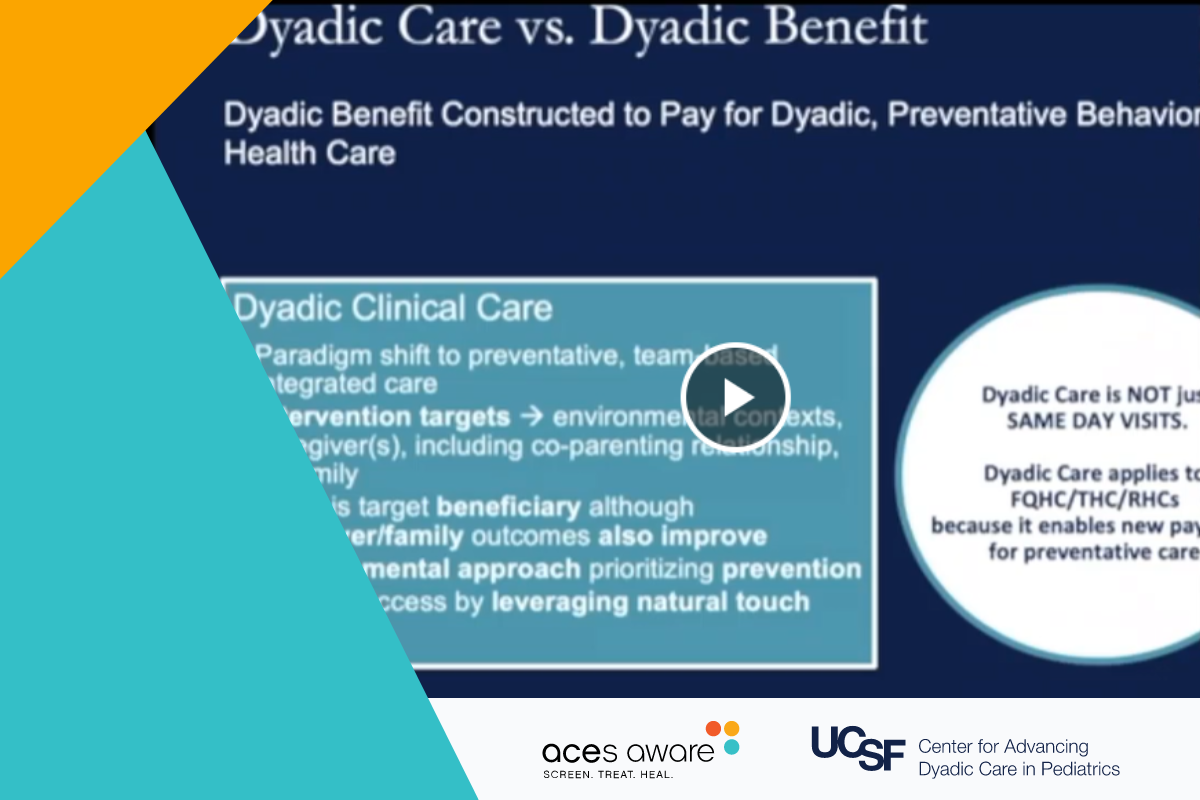
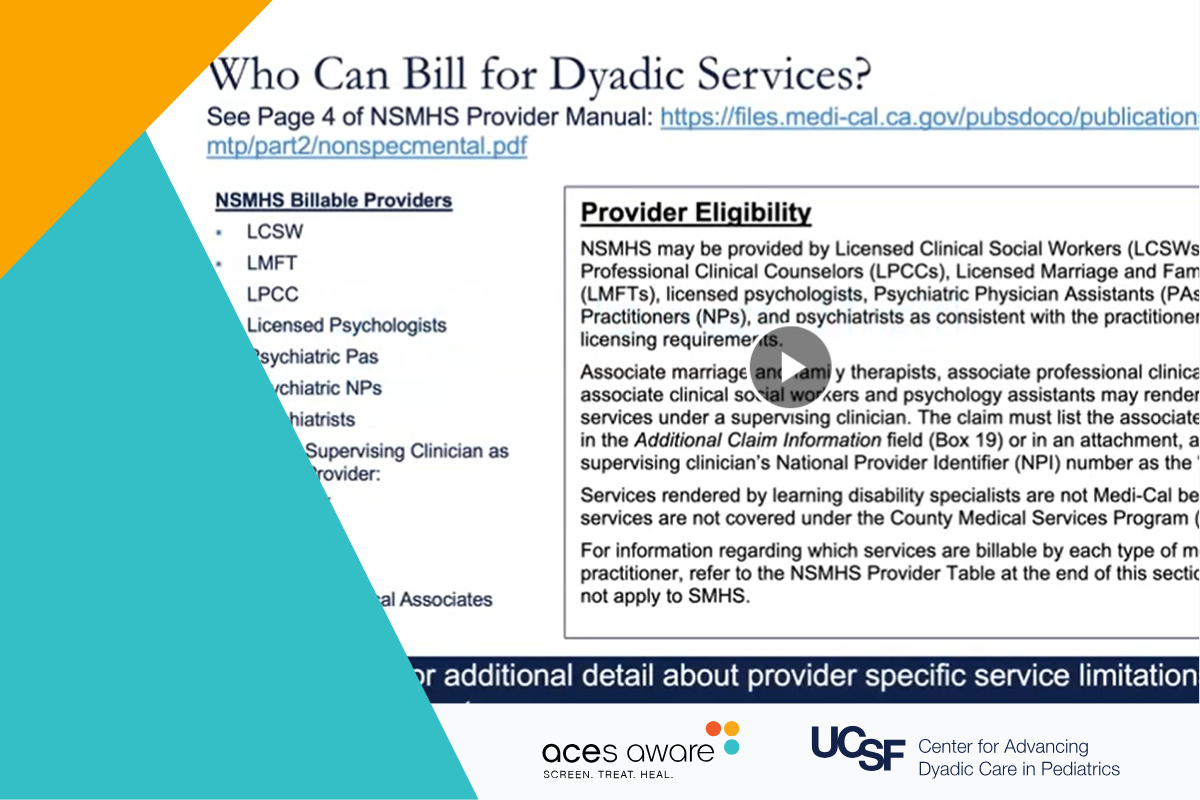
As we continue to understand this paradigm shift, moving from problem-focused to prevention-based, as well as from individual to team-based care, this video helps explain which provider types are eligible to bill for these dyadic services.
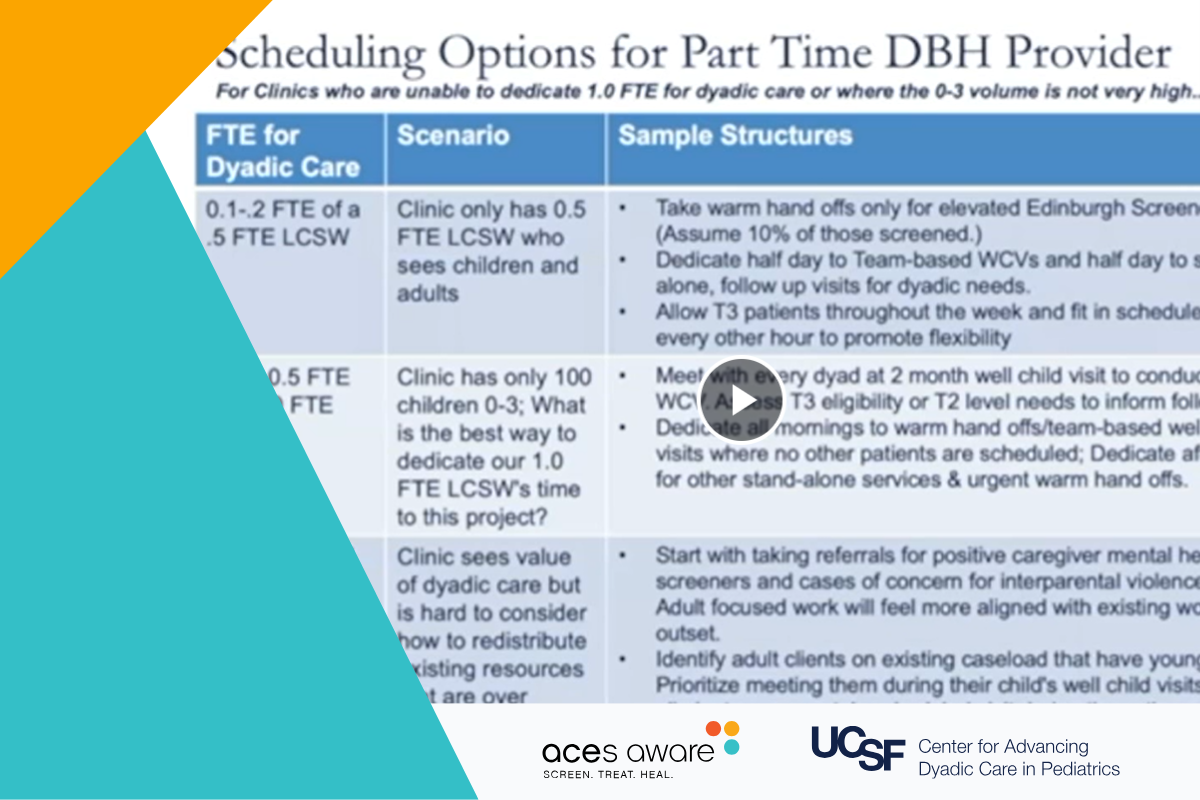
One of the greatest barriers many clinics face is the shortage of behavioral health staff, in particular those with early childhood experience. Here in this video, we take a look at how to analyze your present workforce, skillset, and patient load to find a schedule that could work for all. With dyadic services, it is also important to highlight the opportunities that are presented to capture adult caregivers and support their mental health needs within the well child visit, as ...
Taking a look at provider eligibility for dyadic care services, this video dives deep into what a dyadic behavioral health provider might look like in practice. Attention is brought to the HealthySteps program and their set of competencies for specialists as a useful guide, as well as highlighting the DC 0-5 diagnostic manual and its dimensions of caregiving scale.
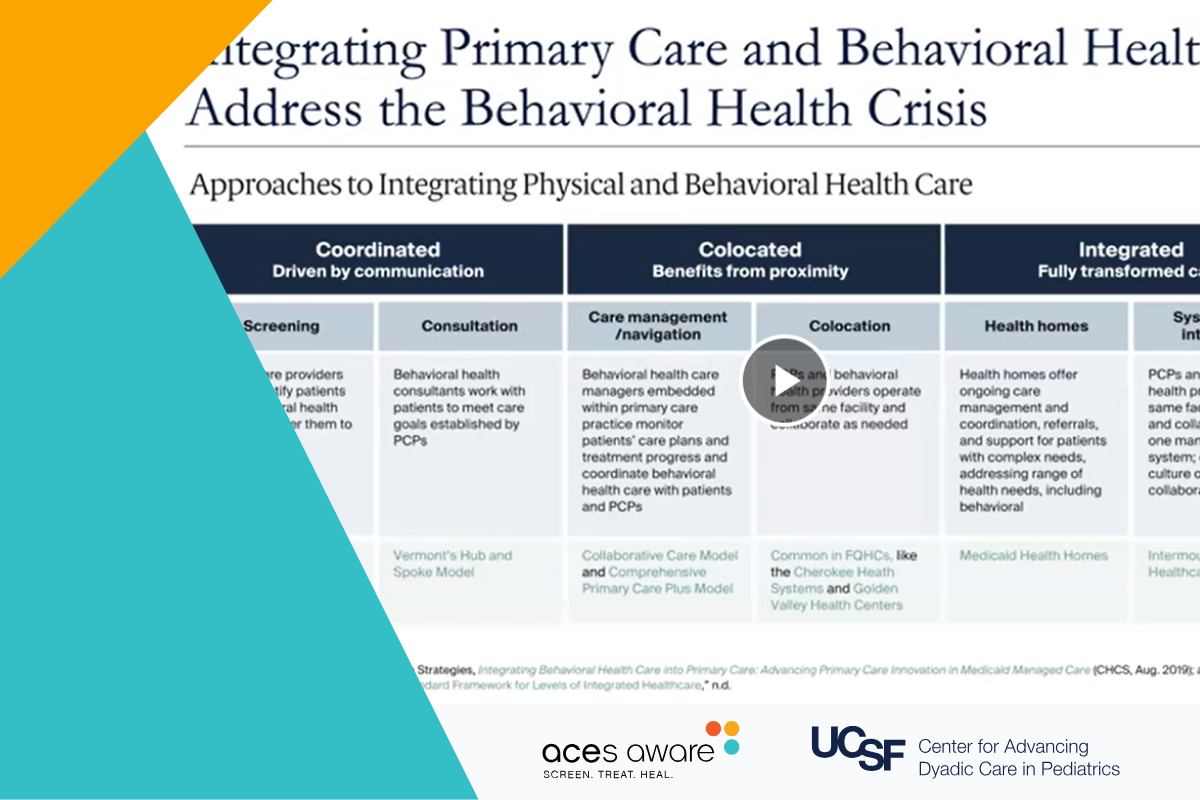
Practice transformation is challenging and integrated behavioral health is no exception. There are potential benefits of integrated behavioral health, as explained in this video. Learn about a tool to help assess how your practice is doing.
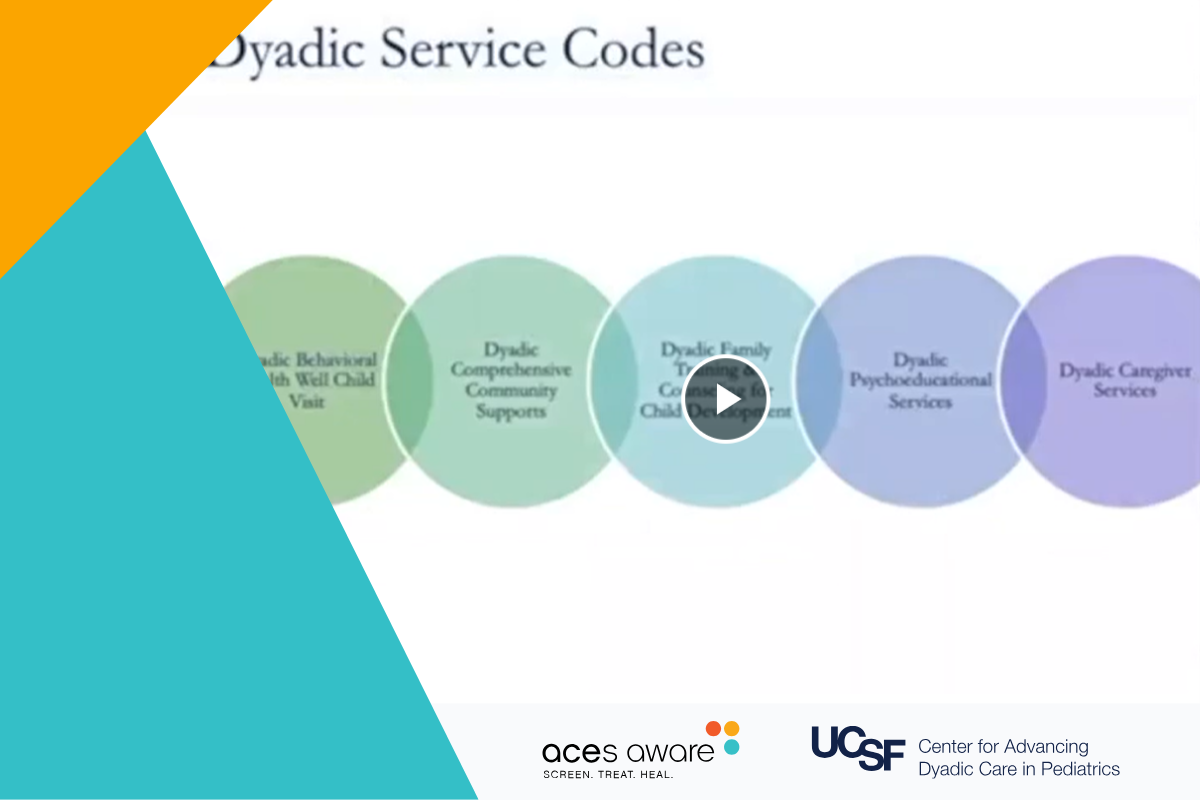
This video offers a deep dive into each new dyadic service code, reading through what is listed in the NSMHS manual as far as what is required and what is covered, as well as discussing how to implement them.
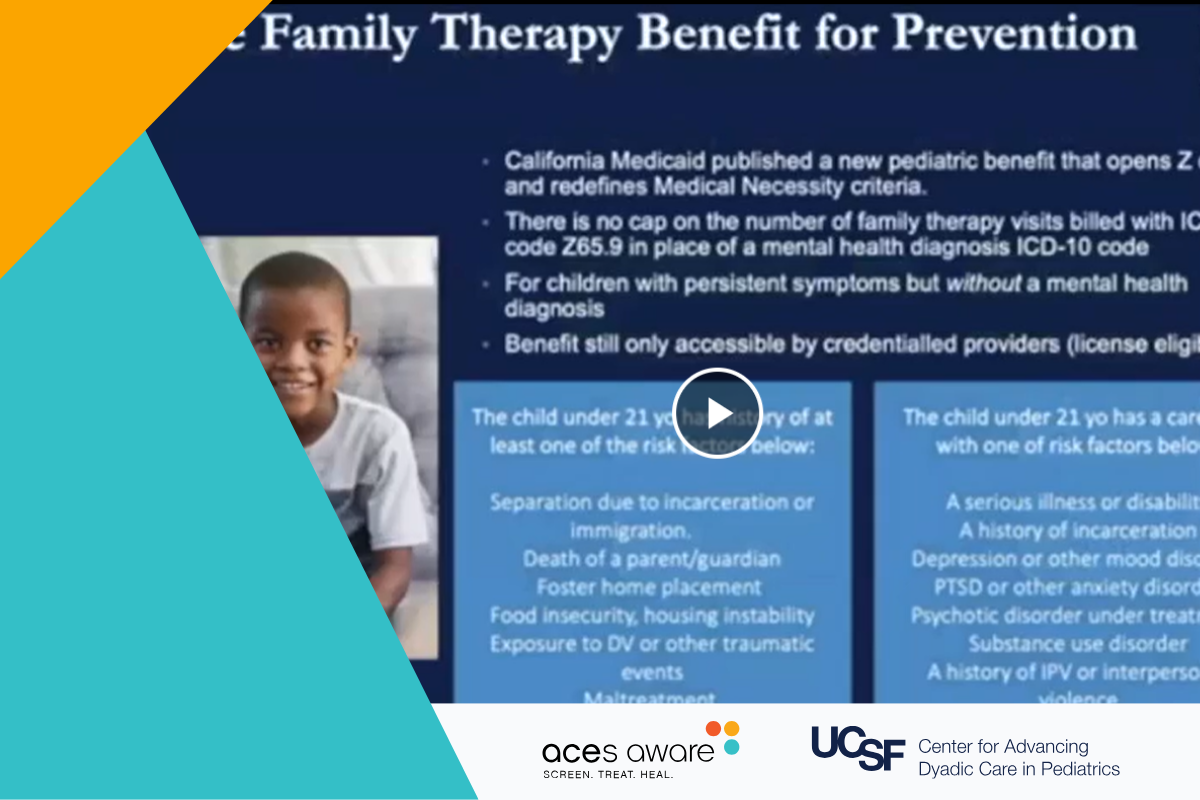
A summary of the present family therapy code is shared in this video, along with an exploration into how it might be incorporated into a clinic focused on caring for dyads, even though it is separate from the dyadic service codes.
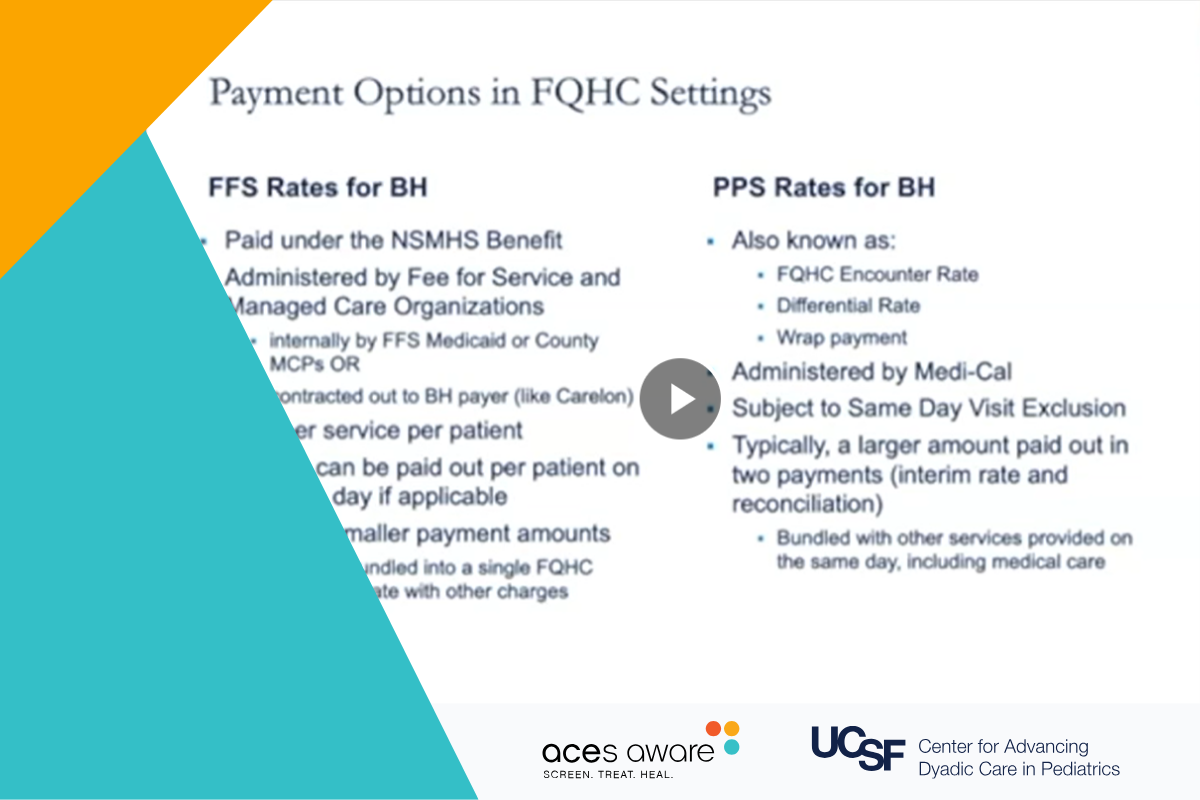
Understanding the breakdown of how FQHC billing happens for Behavioral Health services includes a special look at how reimbursement happens and is impacted based on type of billing service. In this video, the ways to maximize revenue even for same day visits is explored.
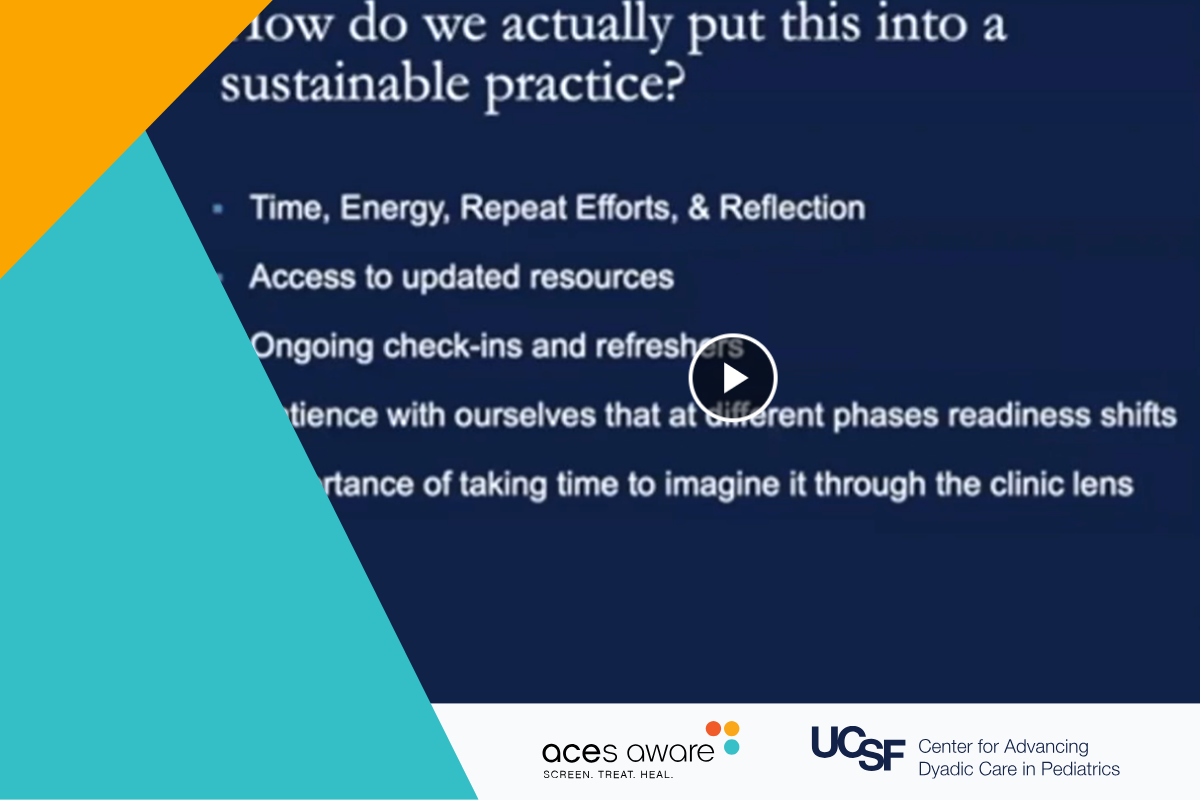
In order to begin an exploration into dyadic care services, it can be helpful to understand what key elements might be needed to work towards something sustainable. In this video, learn about the basics of dyadic care billing.
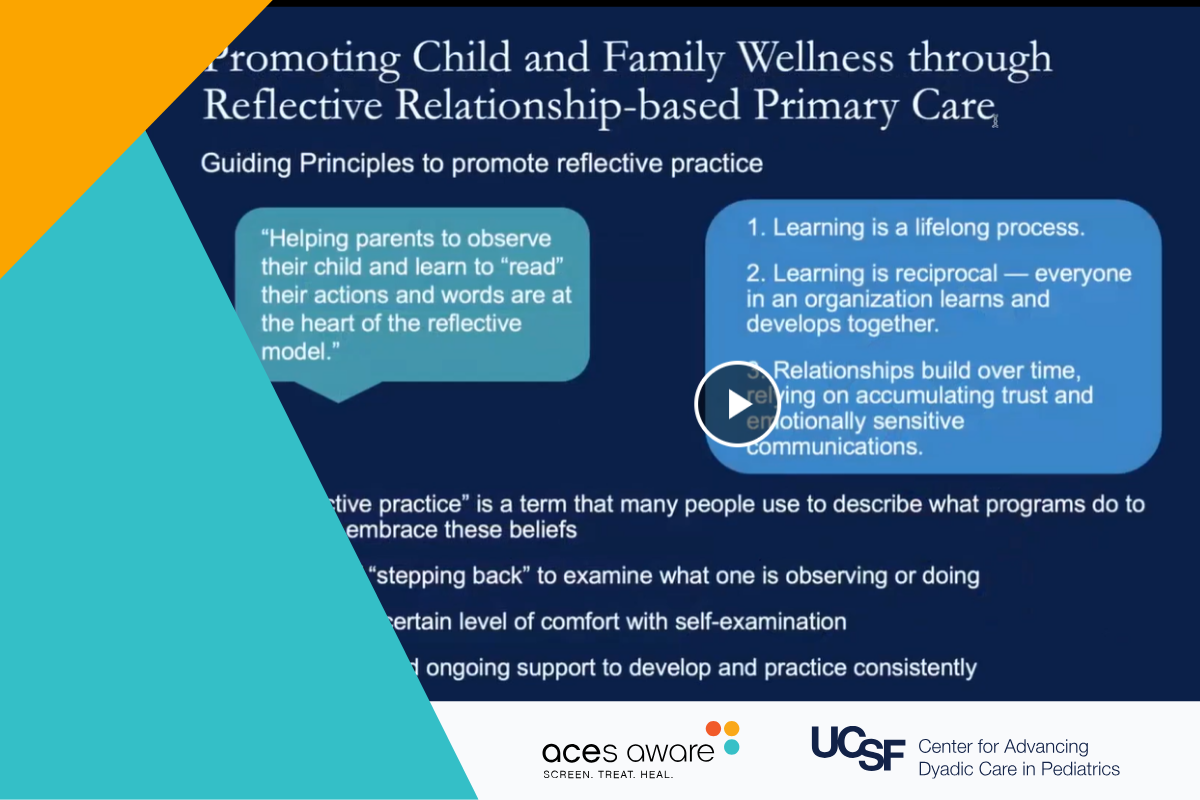
Working from a foundation of reflection and a lens of equity, we find that pediatric providers are able to establish relationships with caregivers that, in turn, support and model the types of relationships we know that allow children to thrive. Here in this video, we learn a bit more about what reflective practice means, as well as how diversity-informed tenets can be a guide for this work.
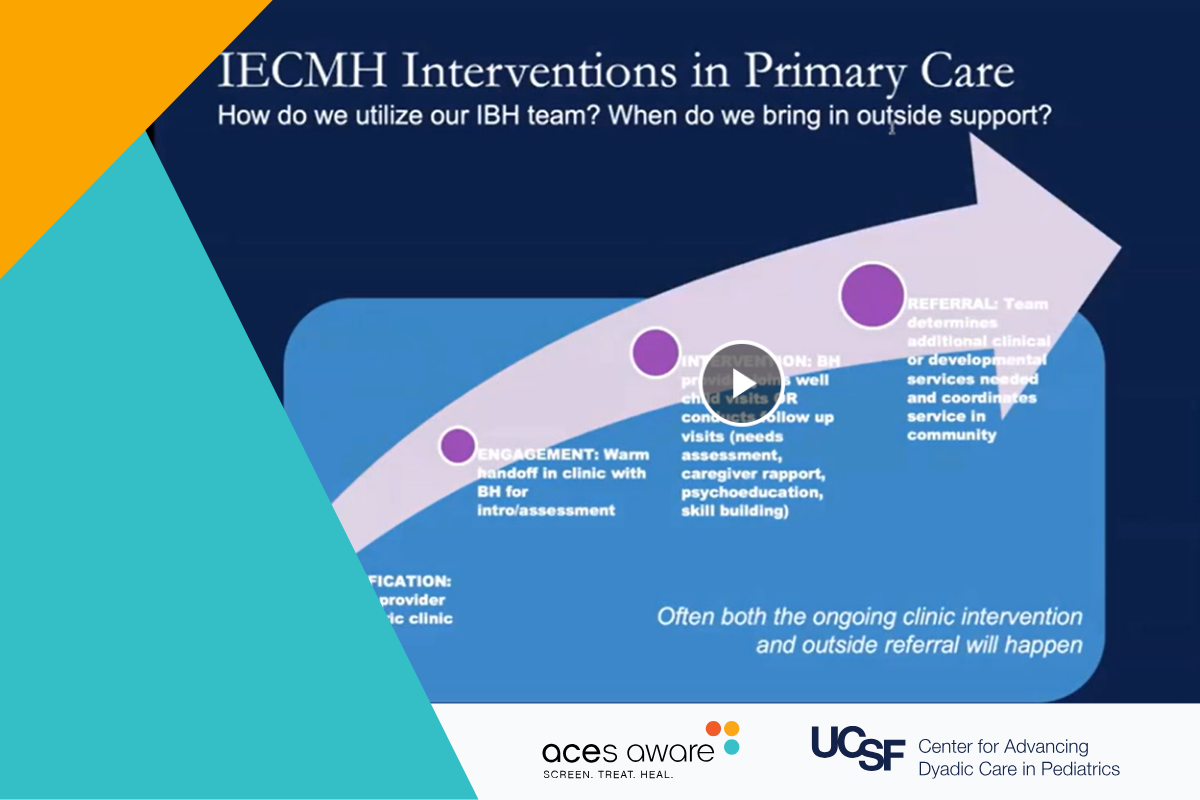
Sometimes the biggest challenge to practice transformation is being able to understand and visualize how the work might actually play out. Here in this video, we are able to follow a trajectory of what a dyadic care visit might look like, exploring the various intervention possibilities.
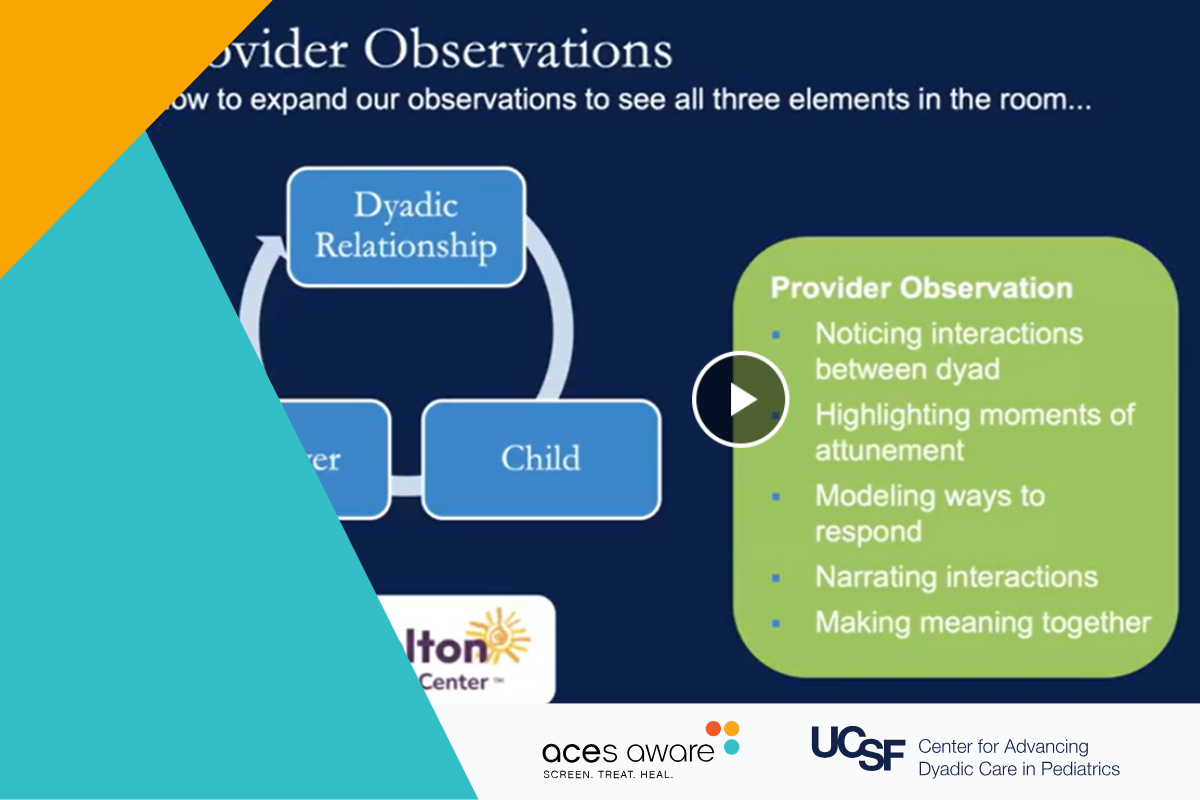
It is important to recognize the power and potential for impact by utilizing observations of a dyad as a tool to inform what might be needed and what questions are valuable to ask. Here in this video, we find practical examples of how to use typical moments in a visit to highlight emotional needs and experiences of a dyad.
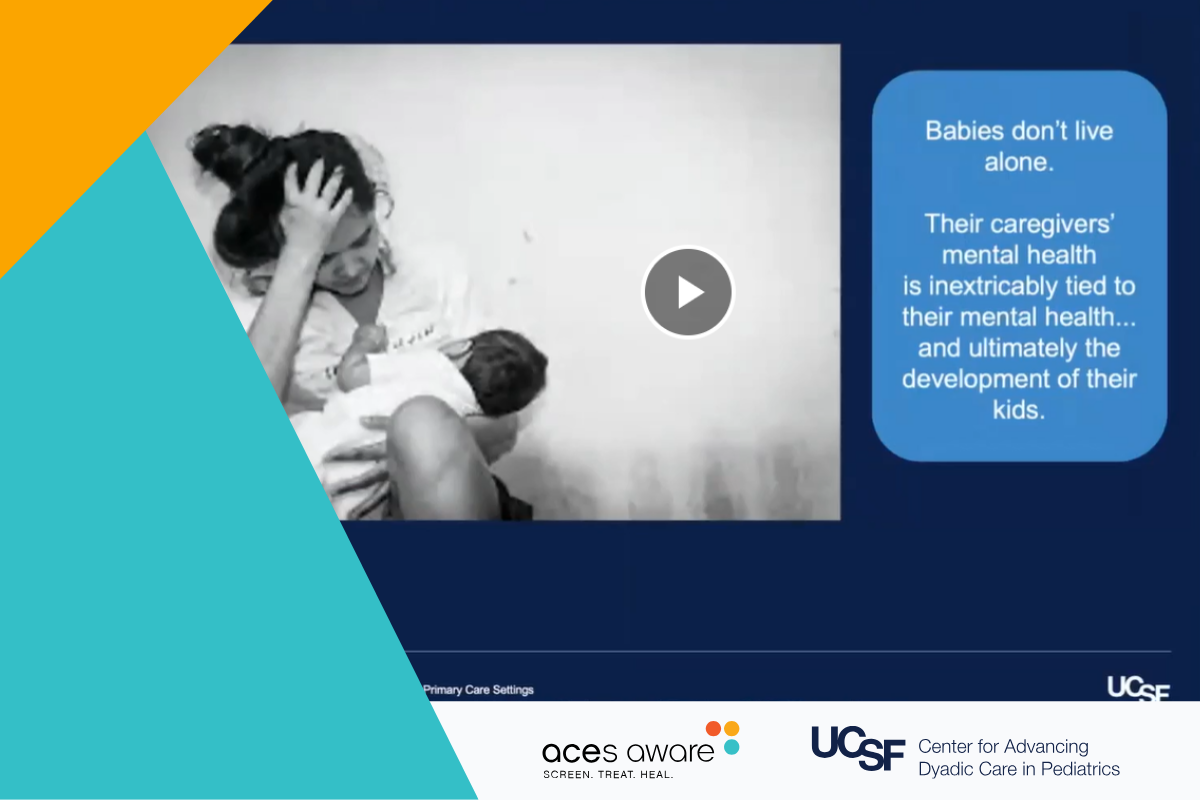
A dyad is seen 12 times in the first 3 years of life. A well child visit is a powerful place filled with teachable moments, a chance to witness moments of attunement, and opportunities for promoting wellness. This video highlights how focusing on prevention work promotes health, as well as supports identifying needs early on.
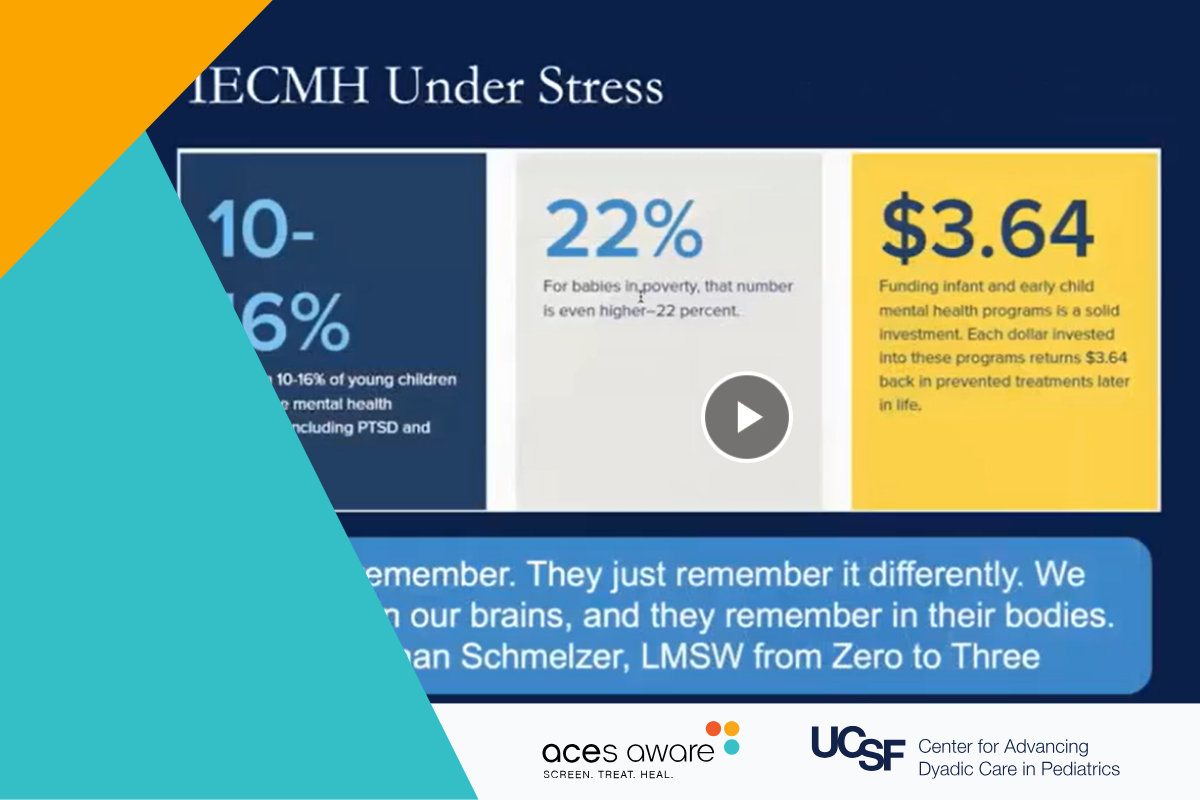
Babies remember stress in their body more than their "brain" - yet, neural connections are firing and creating opportunities for learning and growth. In this video, learn about how stress impacts a child when a caregiver is struggling. When providers understand the larger system patients exist within, this informs the creation of care plans. Early intervention, including emotional regulation and co-regulation work, allows for the potential to reduce or mitigate mental health challenges.
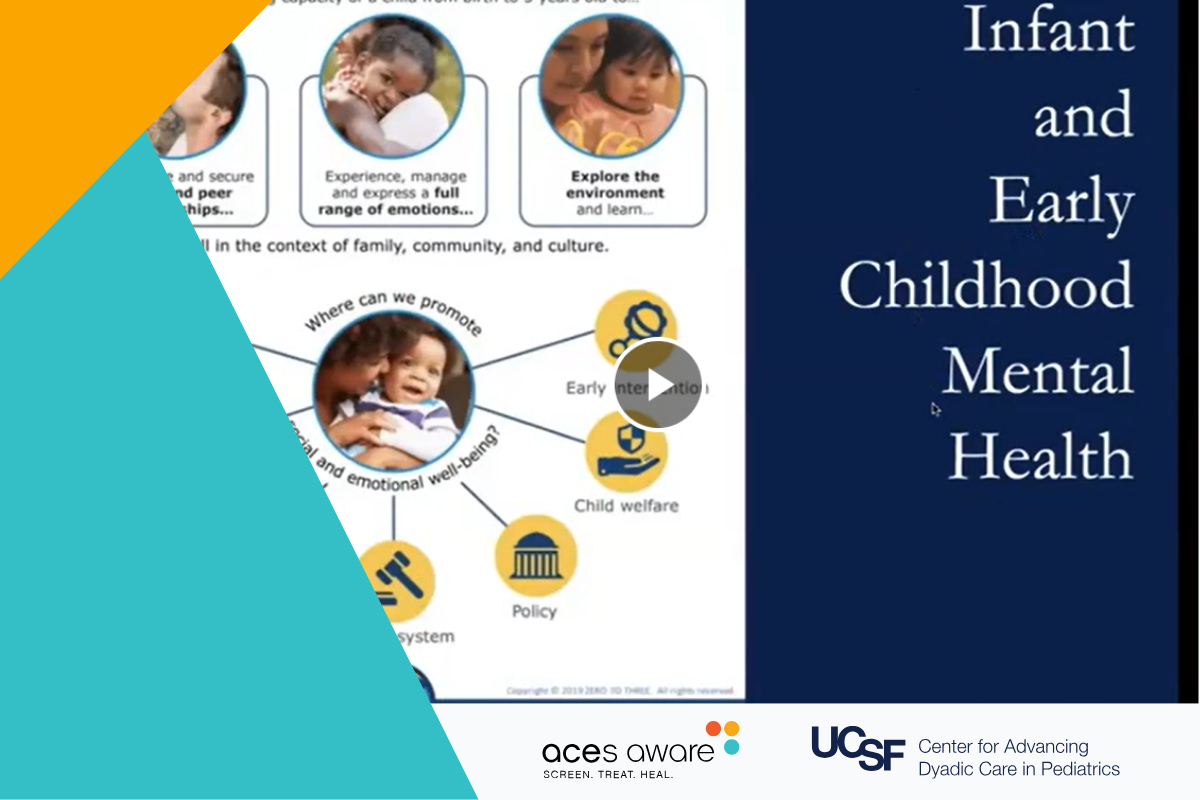
This video offers an overview of Infant and Early Childhood Mental Health (IECMH), which refers to the social and emotional development of children, including developing relationships, experiencing emotions, and exploring environment. This happens within the context of the family culture and community they are growing up. The bio-ecological model highlights how neural connections depend on interactions with adults and the environment, creating layers of potential impact on the child.
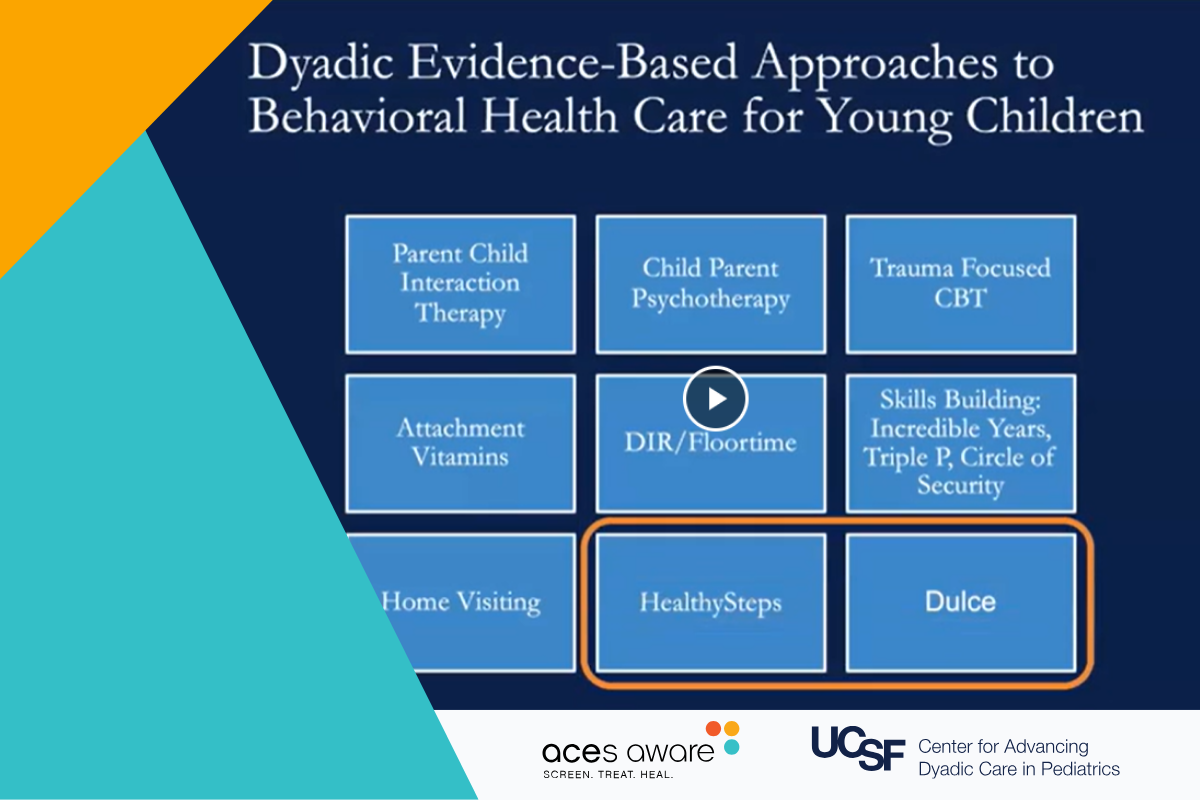
Research shows that comprehensive models of dyadic care in the pediatric clinic setting help identify and address caregiver and family risk factors for the benefit of the child. In this video, learn more about the dyadic intervention in pediatric primary care.
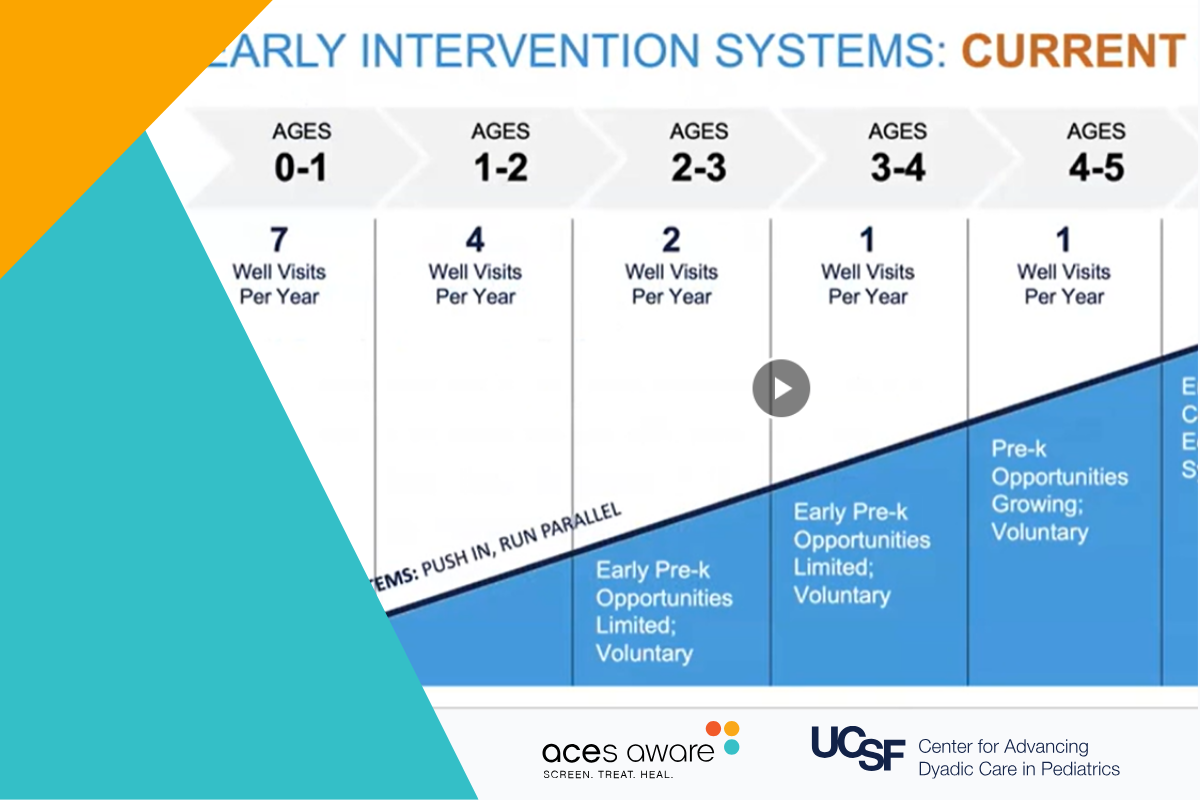
Baby wellness visits are the most frequent point of contact with the healthcare system for families with young children. In this video, learn how these visits can provide an opportunity to address the caregiver and family context, provide behavioral health early intervention, connect families to resources, support early child development, and mitigate intergenerational trauma and the effects of toxic stress.

Pediatric dyadic care focuses on and emphasizes the importance of the relationship between the child and caregiver for healthy development. It is a proactive approach that empowers families to build strong relationships and promote healthy emotional development in children. One of the primary goals of this approach is preventing behavioral or emotional concerns from developing in children by strengthening the parent-child bond and equipping caregivers with skills to support their child's social-emotional growth. Dyadic care models can be particularly helpful ...

Children and families with Medi-Cal insurance can access dyadic care benefits under the Non-Specialty Mental Health services benefit. The dyadic benefit is designed for patients ages 0-20 and is only reimbursable to this age group. Typically, dyadic care is provided by another member of the healthcare team, such as a licensed behavioral health provider, or a community health worker, who works alongside a pediatric healthcare provider. In this video series, learn more about billing for dyadic care.

In this integrated care model, pediatric mental health professionals are available to address developmental and behavioral health concerns as soon as they are identified, bypassing the many obstacles families face when referred to offsite behavioral health services. Furthermore, in this model, health care for the child is delivered in the context of the caregiver and family (i.e. “dyadic health care services”) so that families are screened for behavioral health problems, interpersonal safety, tobacco and substance misuse, and social determinants of ...
Infants rely on relationships with caregivers for survival. The relationship between an infant or young child and their caregiver(s) is one of the most critical factors influencing health and development for the rest of a person’s life. “Dyadic” approaches to health and wellness integrate the science of relationships into pediatric healthcare by centering significant relationships into assessment, intervention, and referrals as part of the pediatric patient’s care plan. Dyadic care in pediatric primary care means expanding the focus of pediatric ...

This training from Humboldt County Department of Health and Human Services is organized into seven modules and provides information on the vulnerability and resilience of young children in relation to brain development and ACEs.