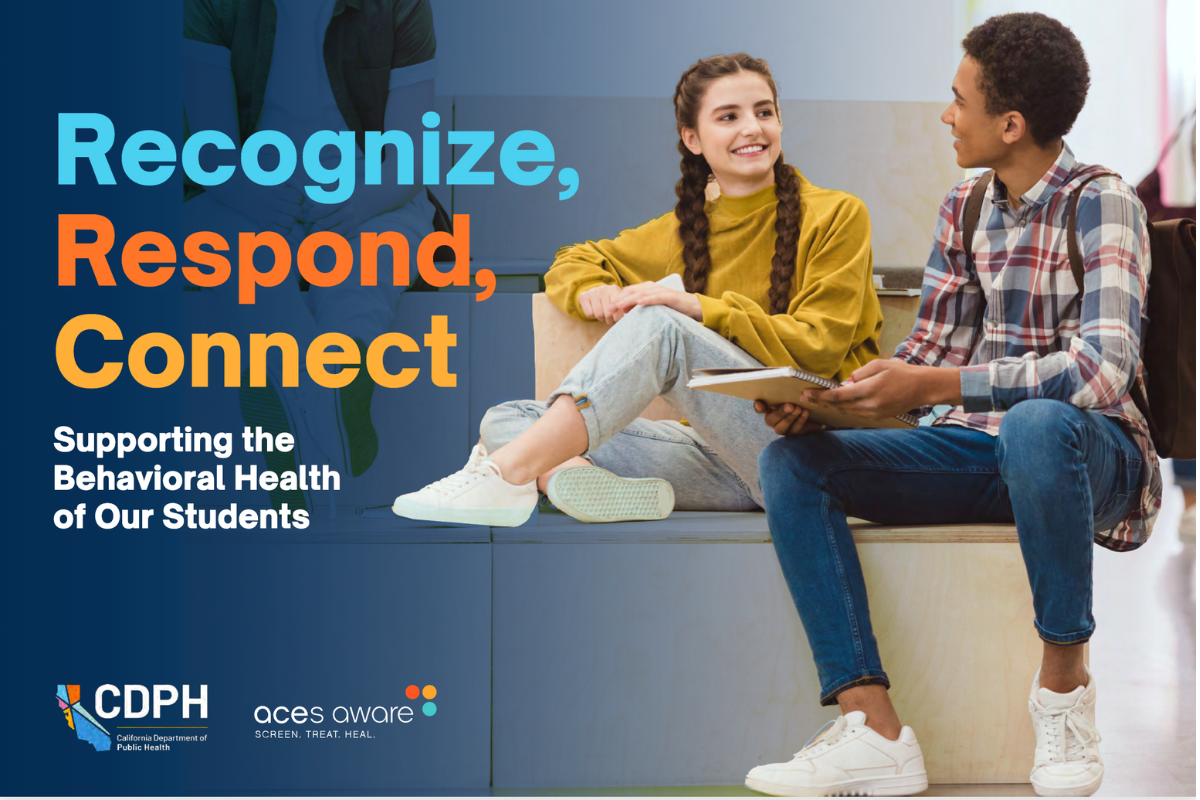
Recognize, Respond, Connect: Supporting the Behavioral Health of Our Students
About
The California Department of Public Health, Office of School Health, the California Department of Education, and subject matter experts have developed this no-cost, online 50-minute training to provide information on how school staff, as trusted adults, can support the social, emotional, and physical well-being of students by creating learning environments where students feel safe, accepted, and valued. This training is aligned with the requirements of California Education Code Section 49428.2(c) and welcomes participants into a community of staff that can access a wide range of other training opportunities to support their students. Created for all school staff (grades 7-12) the Recognize, Respond, Connect: Supporting the Behavioral Health of Our Students training aims to:
- Teach simple, practical ways school staff can become trusted and caring adults in the lives of students to build safe and supportive school communities where everyone can thrive.
- Provide an overview of Adverse Childhood Experiences (ACEs) and other common adversities, and how they can affect students’ ability to learn, connect, and thrive.
- Guide staff on how to recognize signs of distress in students, respond with empathy and support, and make referrals for students experiencing behavioral health challenges.
Learning Objectives
- Identify the unique risk factors and warning signs of mental, emotional, and behavioral health problems in students.
- Apply trauma-informed approaches to support students who may be experiencing challenges.
- Describe the benefits of early detection and intervention and follow appropriate protocols for referring students to additional support, including services.
Professional Credit
- This activity provides the following types of credit: AMA, AAPA, APA, ANCC, ASWB, ABIM-MOC, ABP-MOC.
- 1.0 credits are available.
- Activity document
Acknowledgements
- Aaron Norr, PhD, ACEs Aware
- Amanda Mangurten, MS, PhD, California Department of Public Health, Office of School Health
- Charles Martin, EdD, ACEs Aware
- Chere Nieto, BS, California Department of Public Health, Office of School Health
- Christobelle Tan, MA, EdD, San Diego County Office of Education
- Dorothy Guinter, MS, San Dieguito Union High School District
- Erika Ramirez, MPH, ACEs Aware
- Erin Frame, BA, California Department of Public Health, Office of School Health
- Gustavo Loera, EdD, ACEs Aware
- Jim Kooler, MPH, DrPH, California Department of Public Health, Office of School Health
- Joyce Dorado, PhD, Healthy Environments and Response to Trauma in Schools (HEARTS)
- Khoa-Nathan Ngo, California Children and Youth Behavioral Health Initiative
- Margaret Sedor, PhD, California Association of School Psychologists
- Maria D. Contreras, MPH, California Department of Public Health, Office of School Health
- Patricia Lester, MD, UCLA Semel Institute for Neuroscience and Human Behavior
- Tully, PhD, Kooth
- Victor Manuel Zuniga Jr., California Department of Public Health, Office of School Health
- California Department of Education, Office of School-Based Health Programs
- Soluna Young Adult Ambassadors
- Soluna Outreach and Engagement Team
- Youth Creating Change
Related Items

The Open Doors Training project is a comprehensive training designed to empower non-clinical, youth-serving adults across California by equipping them with additional skills and knowledge to engage with young people on topics related to substance use and other behavioral health issues. This training is ideal for adults in who interact with youth, including educators, community leaders and volunteers, child welfare workers, and other non-clinical professionals.
Website
Added on 3/10/2026
- Aaron Norr, PhD, ACEs Aware
- Amanda Mangurten, MS, PhD, California Department of Public Health, Office of School Health
- Charles Martin, EdD, ACEs Aware
- Chere Nieto, BS, California Department of Public Health, Office of School Health
- Christobelle Tan, MA, EdD, San Diego County Office of Education
- Dorothy Guinter, MS, San Dieguito Union High School District
- Erika Ramirez, MPH, ACEs Aware
- Erin Frame, BA, California Department of Public Health, Office of School Health
- Gustavo Loera, EdD, ACEs Aware
- Jim Kooler, MPH, DrPH, California Department of Public Health, Office of School Health
- Joyce Dorado, PhD, Healthy Environments and Response to Trauma in Schools (HEARTS)
- Khoa-Nathan Ngo, California Children and Youth Behavioral Health Initiative
- Margaret Sedor, PhD, California Association of School Psychologists
- Maria D. Contreras, MPH, California Department of Public Health, Office of School Health
- Patricia Lester, MD, UCLA Semel Institute for Neuroscience and Human Behavior
- Tully, PhD, Kooth
- Victor Manuel Zuniga Jr., California Department of Public Health, Office of School Health
- California Department of Education, Office of School-Based Health Programs
- Soluna Young Adult Ambassadors
- Soluna Outreach and Engagement Team
- Youth Creating Change
Related Items
The Open Doors Training project is a comprehensive training designed to empower non-clinical, youth-serving adults across California by equipping them with additional skills and knowledge to engage with young people on topics related to substance use and other behavioral health issues. This training is ideal for adults in who interact with youth, including educators, community leaders and volunteers, child welfare workers, and other non-clinical professionals.