All items of type 'printable tool'
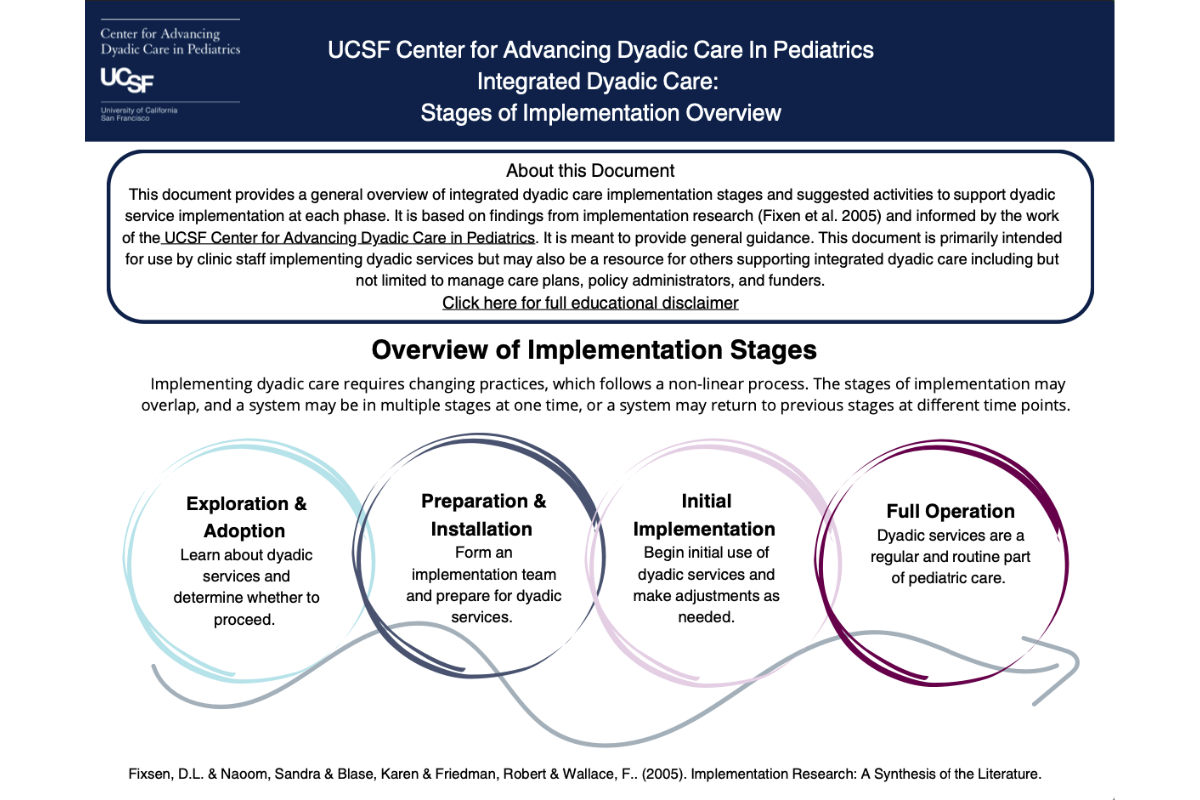
This document provides a general overview of integrated dyadic care implementation stages and suggested activities to support dyadic service implementation at each phase. It is based on findings from implementation research and informed by the work of the UCSF Center for Advancing Dyadic Care in Pediatrics. It provides general guidance, primarily for clinic staff implementing dyadic services, but may also be useful for others that support integrated dyadic care, including managed care plans, policy administrators, and funders.
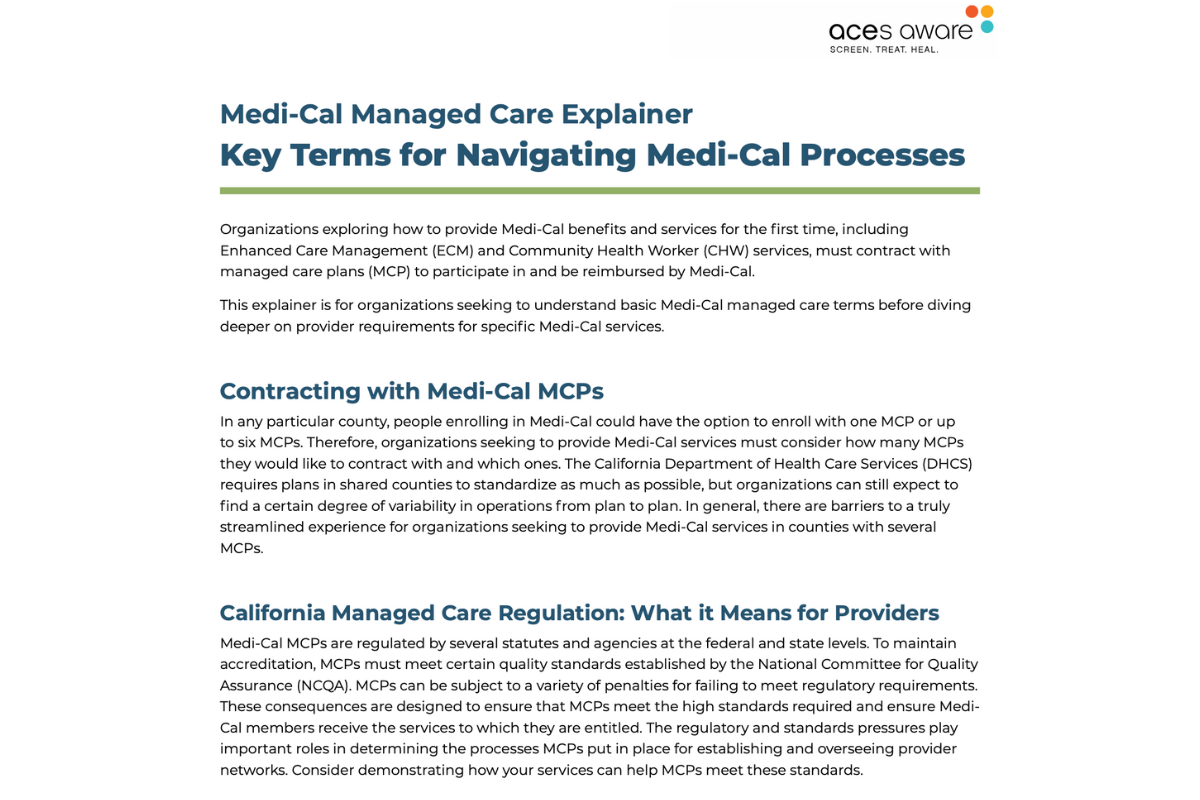
This Medi-Cal Managed Care Explainer is for organizations seeking to understand basic Medi-Cal managed care terms before diving deeper on provider requirements for specific Medi-Cal services, including Enhanced Care Management (ECM) and Community Health Worker (CHW) services.
This ECM Billing Guide walks providers through the steps to appropriately bill a Managed Care Plan (MCP) for ECM, questions to ask the contracted MCP, and considerations for other necessary decisions.
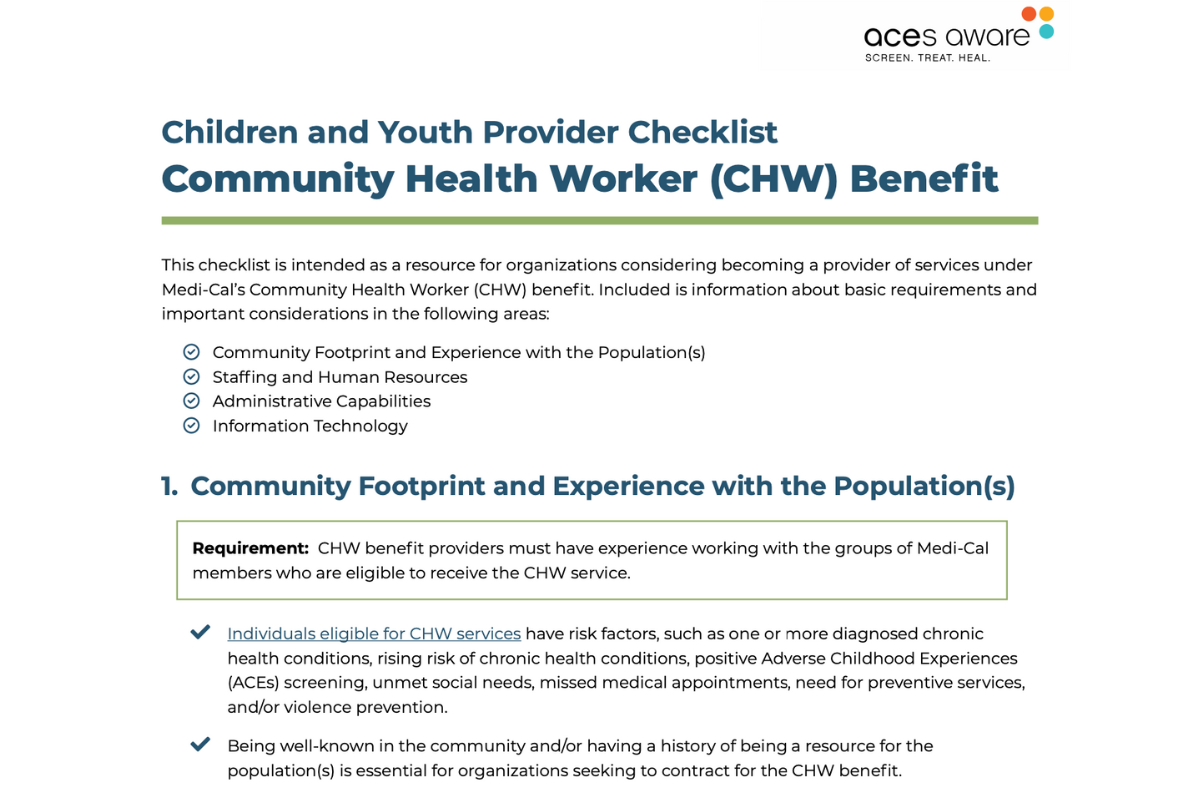
This CHW checklist is intended as a resource for organizations that are considering becoming a provider of services under Medi-Cal’s CHW benefit for children and youth populations.
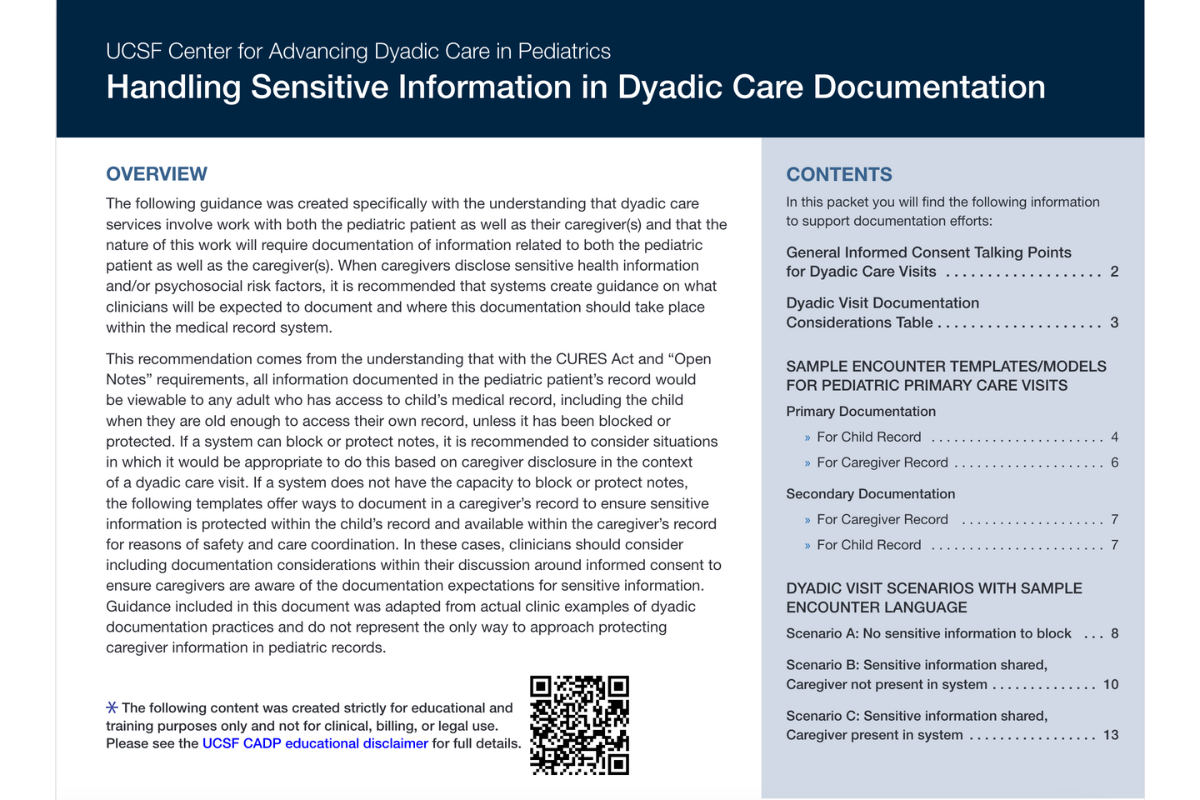
This resource offers guidance on documenting dyadic care visits while protecting sensitive caregiver information in compliance with the CURES Act and “Open Notes” requirements. It includes documentation strategies, adaptable templates, and real-world clinic examples. There is an accompanying video recommended to view in conjunction with this document that provides more background information on the CURES Act as well as an overview of the document itself to support users in navigating and applying the guidance effectively.
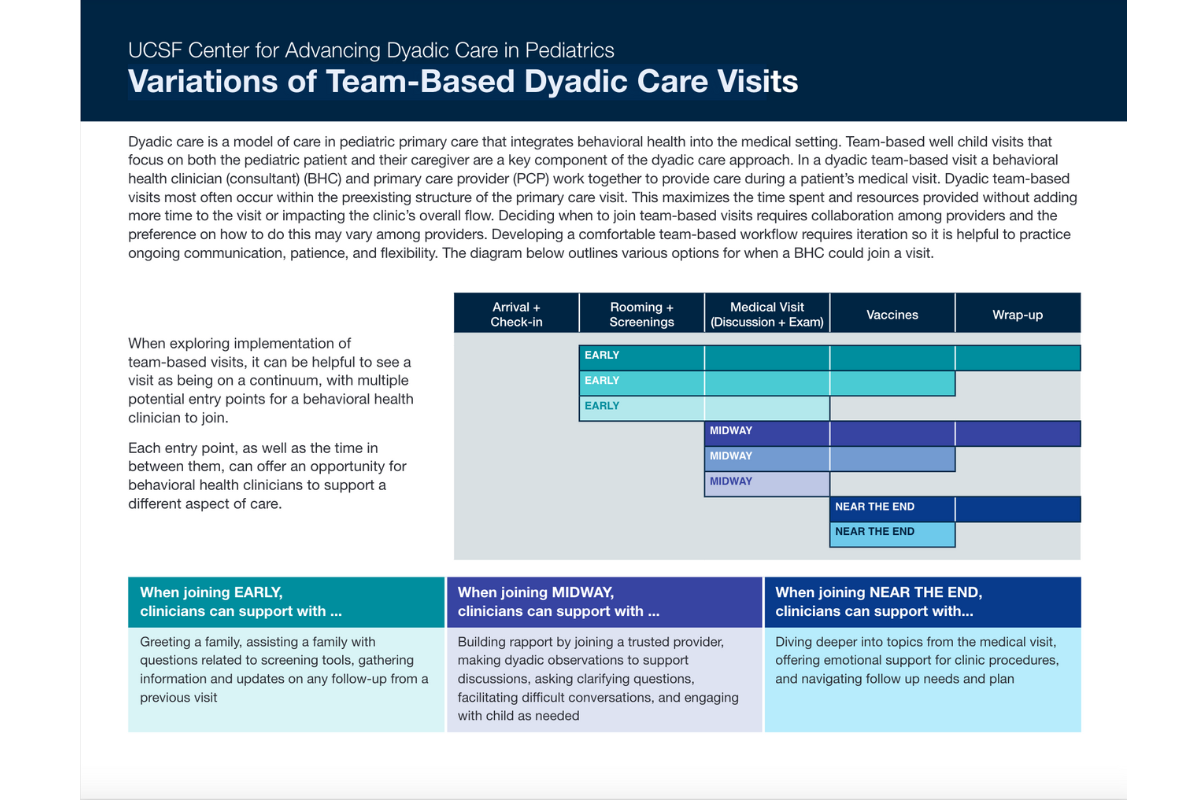
This document offers practical guidance for implementing dyadic, team-based well-child visits in pediatric primary care, where a behavioral health clinician (BHC) and primary care provider (PCP) collaborate to support both the child and caregiver. It includes options for when a BHC can join a visit, along with examples that demonstrate variations in real-world practice. There is an accompanying video explanation that is recommended to view in conjunction with this document to help users navigate the document and apply the guidance effectively.
This FAQ document is a collection of questions and answers organized by key topics to support the understanding and implementation of dyadic care. This document answers common questions about dyadic care, the connection between dyadic care and Adverse Childhood Experiences (ACEs), practical applications of dyadic care, billing guidance for the dyadic benefit, considerations for data and electronic medical records (EMR), and more.
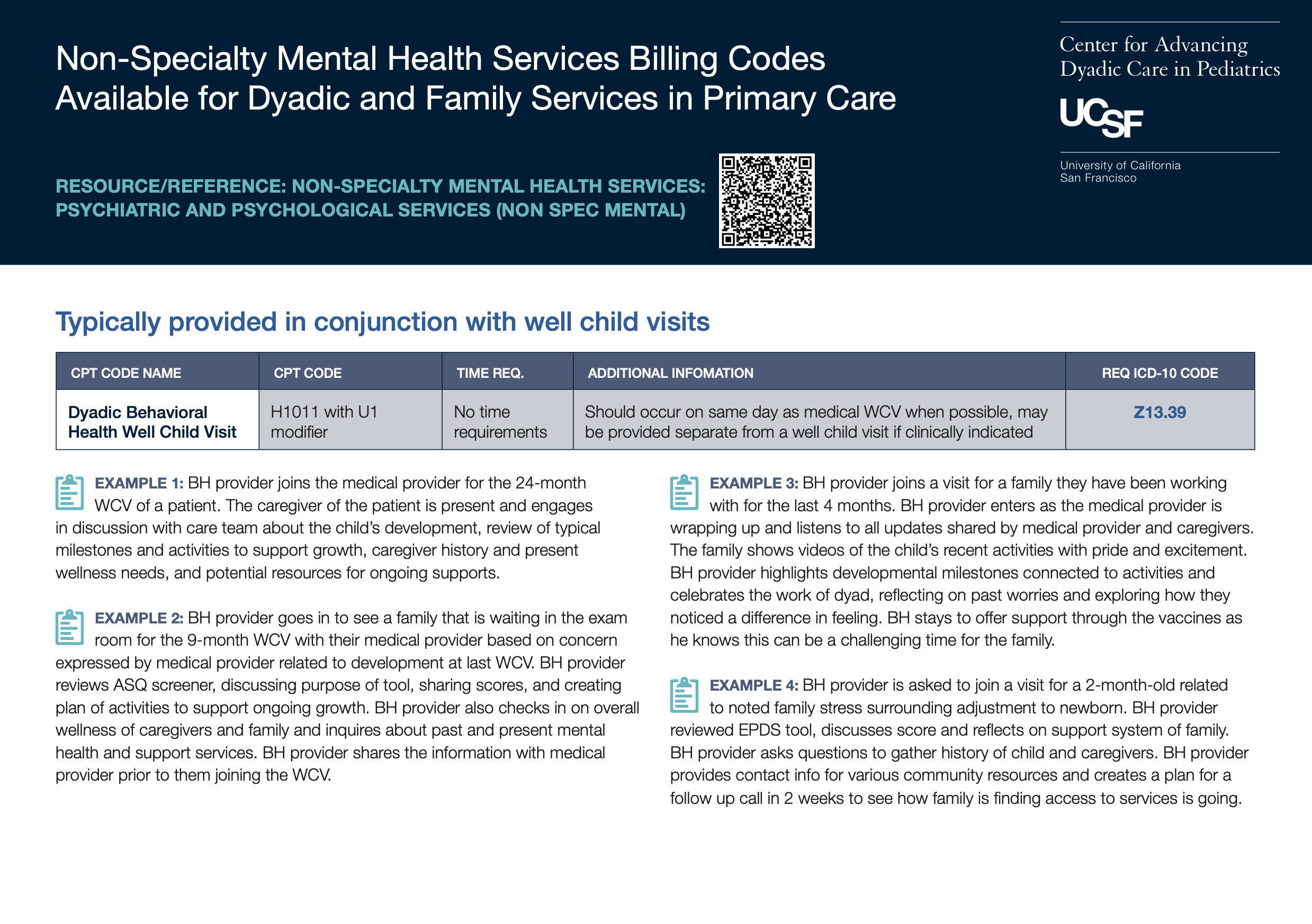
This document outlines billing codes identified in the Non-Specialty Mental Health Services Manual as available for dyadic and family services in primary care. It includes each Current Procedural Terminology (CPT) code, any known time requirements, required International Classification of Diseases (ICD)-10 codes, and additional billing details. It also provides practical examples to illustrate how dyadic care visits may look in real-world settings, helping teams apply the codes accurately and confidently.
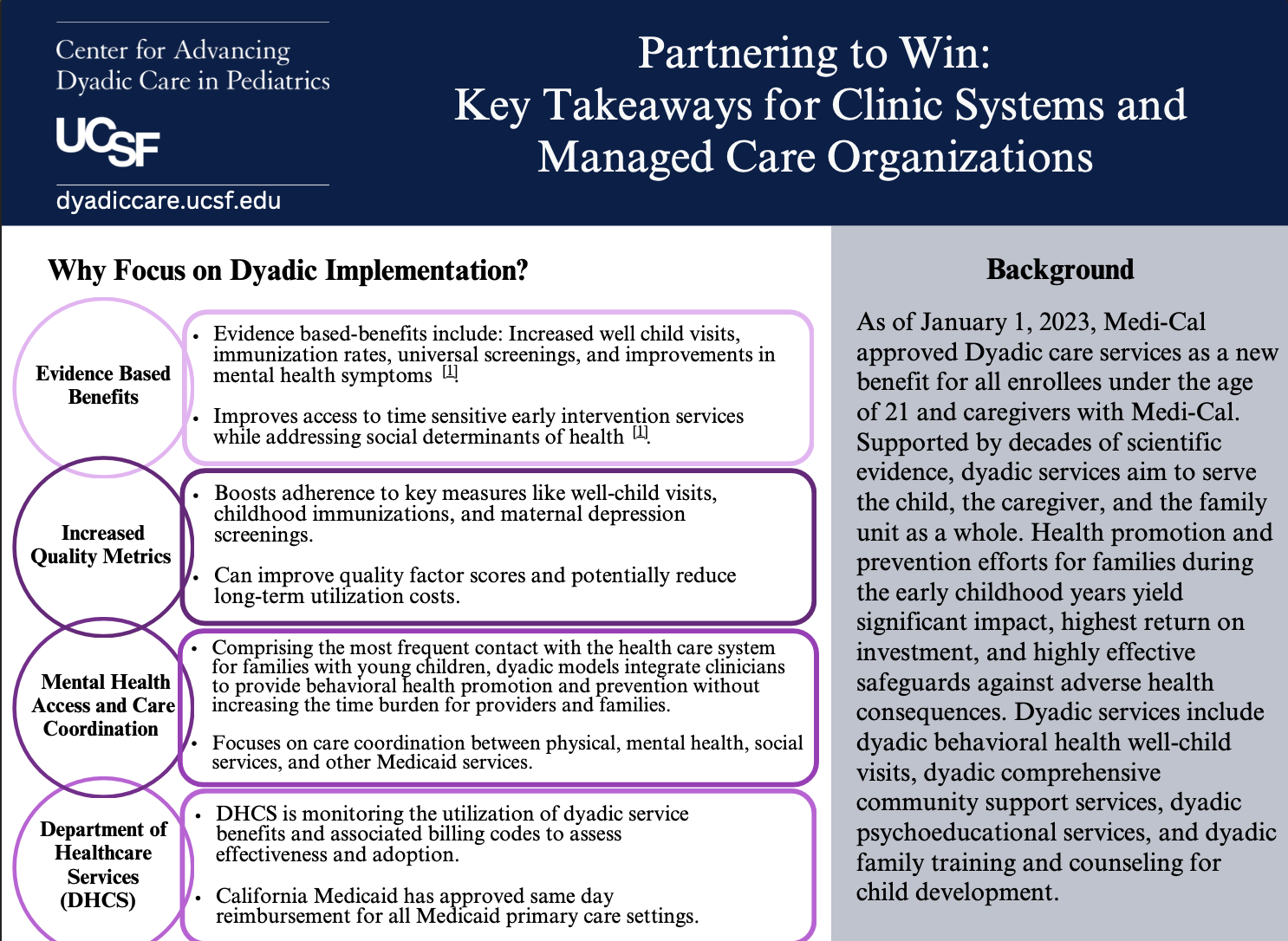
This resource provides background information on the dyadic benefit and key takeaways for clinic systems and managed care plans. It highlights the evidence-based benefits of focusing on dyadic care, outlines key action items for managed care plans to support uptake, and provides relevant tools to guide implementation.
These dyadic documentation templates provide examples of how dyadic care services may be documented in accordance with the guidelines outlined in the California Department of Health Care Services (DHCS) Non-Specialty Mental Health Services (NSMHS) Manual (last updated January 2025) and are intended solely for educational and training purposes.

Pediatric primary care offers an unparalleled opportunity to promote child health by also supporting the health of caregivers through dyadic interventions. This handout is useful for understanding the rationale for dyadic care models in primary care settings.
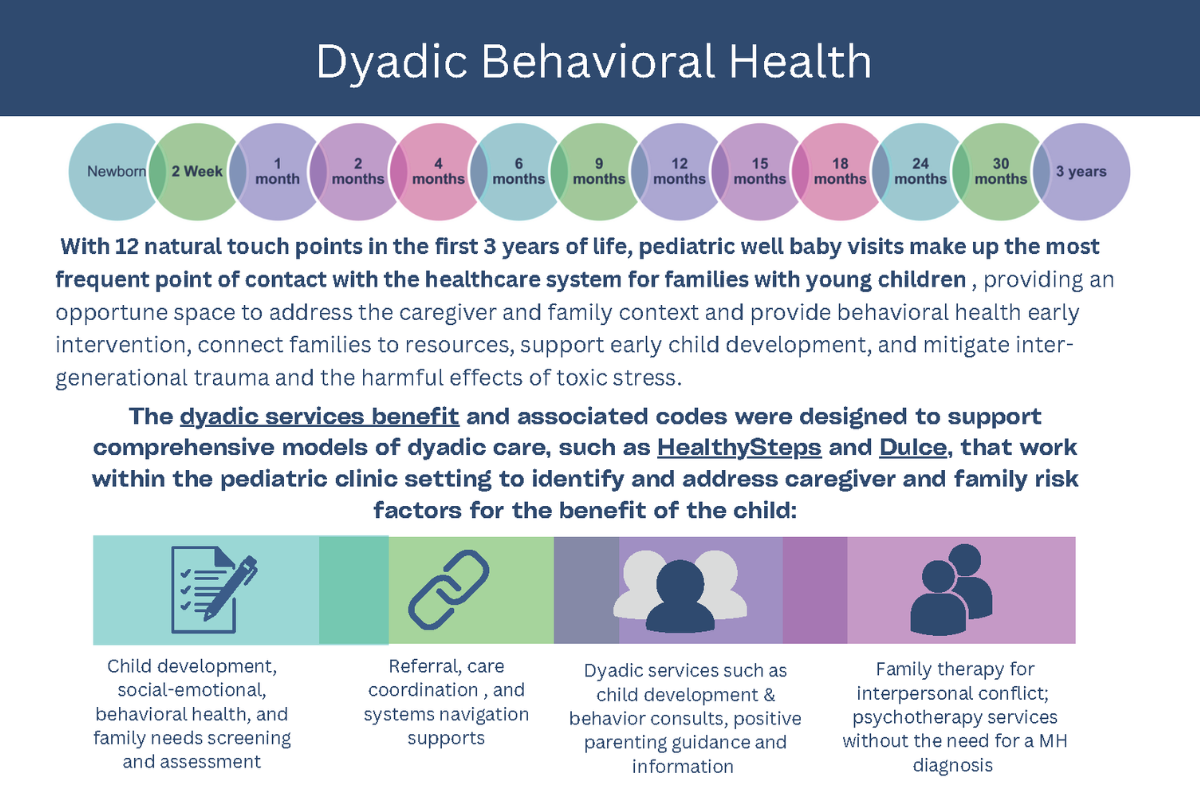
Dyadic care improves child health and the way healthcare is delivered. This handout offers a summary of dyadic care in behavioral health settings.